
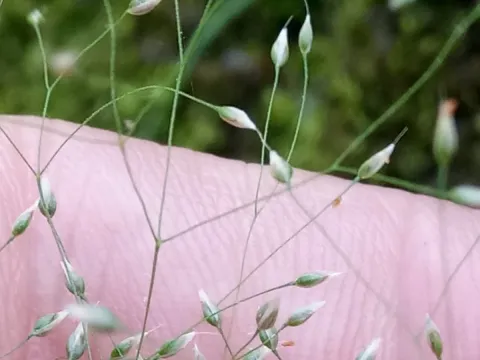
Aira tenorei
Aira tenorei
Aira tenorei is an annual herbaceous plant belonging to the Poaceae family. Native to the Mediterranean region, this grass is a classic example of an ephemeral species, optimized by nature to complete its life cycle during the brief periods of favorable conditions.
What the section contains
Aira tenorei
The plant thrives in open, sunny environments. It is highly intolerant of shade, making it unsuitable for areas with dense canopy cover or northern exposures that lack direct sunlight throughout the day.
It prefers well-drained, nutrient-poor, sandy or rocky soils. The soil pH should ideally be neutral or slightly acidic. Poor drainage is the primary limiting factor for this species, as it rapidly causes root decay in damp conditions.
In terms of climate, Aira tenorei is perfectly adapted to the Mediterranean climate, characterized by mild, wet winters and hot, dry summers. It exhibits remarkable drought tolerance, which is its key evolutionary advantage.
Botanically, the plant grows in small, dense tufts, reaching heights of 20–30 cm. Its panicles are delicate and airy, which provides a high aesthetic appeal and makes the plant a valuable addition to dry-garden landscapes.
Sowing should be performed in early spring, once the soil temperature consistently reaches 10–12°C. This timing ensures that the plants establish themselves before the onset of the summer heat.
Because the seeds are exceptionally small, they should be surface-sown or covered with only a very thin layer of soil. Proper contact between the seed and the soil is essential for efficient moisture uptake during germination.
In regions with mild winters, autumn sowing can be a viable strategy. The seeds will remain dormant and undergo natural stratification, leading to vigorous, early growth as soon as the temperatures rise.
Maintaining proper plant spacing is crucial to prevent competition for resources. Sparse sowing encourages the development of individual tufts, which improves both the health of the crop and its visual display.
Watering is necessary only during the initial seedling stage to facilitate germination. Once the root system is established, the plant becomes highly drought-resistant and typically requires no additional irrigation.
Aira tenorei is generally resilient against most common cereal diseases. However, in conditions of poor air circulation or high humidity, powdery mildew may develop, appearing as a characteristic white fungal mat.
Root rot is the most significant threat to this species, almost always resulting from improper site selection where water accumulates after rain. This necessitates the use of raised beds or rocky slopes for cultivation.
Occasional infestations of cereal aphids may occur, particularly during spring months with moderate rainfall. These insects feed on the plant's sap, which can weaken the panicle formation if not monitored.
Prevention involves strictly monitoring soil moisture and avoiding excessive fertilization. Over-fertilized plants tend to grow too quickly, leading to weak tissue structures that are more susceptible to both pests and fungal pathogens.
If chemical or biological intervention is required, selective fungicides or insecticidal soaps can be utilized, provided they are applied during the early vegetative growth stages to minimize impact on the plant's delicate aesthetic features.