
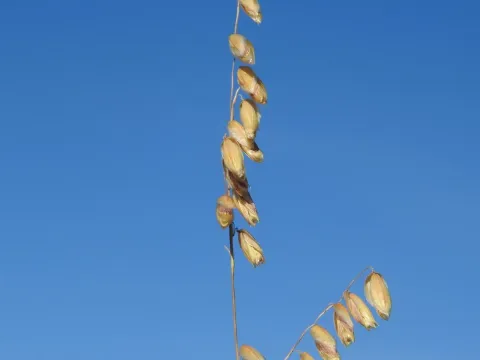
Small melic
Melica minuta
Small melic (Melica minuta) is a perennial grass species belonging to the Poaceae family. Native to the Mediterranean region, this plant has adapted to rocky, well-drained soils and arid environments, showcasing remarkable resilience in challenging climatic conditions.
What the section contains
Small melic
The crop thrives in sunny, open habitats and exhibits significant tolerance to low moisture levels. It prefers calcareous or slightly alkaline soils, which are typical for its natural distribution range in the wild.
Botanically, Melica minuta is characterized by its slender, linear leaves and distinct panicle inflorescences. Its complex root system allows it to stabilize loose soil structures effectively, making it an excellent candidate for erosion control.
Regarding its utility, the plant is primarily utilized in phytoremediation and for stabilizing slopes. Furthermore, it serves as a robust component in pasture mixtures, particularly in areas where more demanding forage grasses fail to establish.
The cultivation of this species focuses on low-input management. It requires minimal irrigation, making it a sustainable choice for landscapes or fields located in warm, semi-arid regions where water conservation is a priority.
Small melic is generally resistant to many common cereal diseases, but it may occasionally suffer from rust fungi if subjected to prolonged high humidity. Proper field spacing is essential to ensure adequate airflow and pathogen prevention.
Insect pests, such as grass-feeding mites or specific stem-boring insects, might affect the yield quality. Monitoring the stands during the active growing season is recommended to detect early signs of infestation.
Root rot is the main threat associated with poor drainage. Selecting sites with high permeability is critical for maintaining healthy, long-lasting stands of this perennial grass.
Weed management during the establishment phase is vital to ensure that the small melic plants have sufficient space to develop their root systems. Once established, the dense stand typically suppresses most encroaching weeds.
While the plant is hardy, overgrazing can lead to population thinning. Implementing a rotational grazing schedule helps preserve the vitality and productivity of the fields over several growing seasons.