
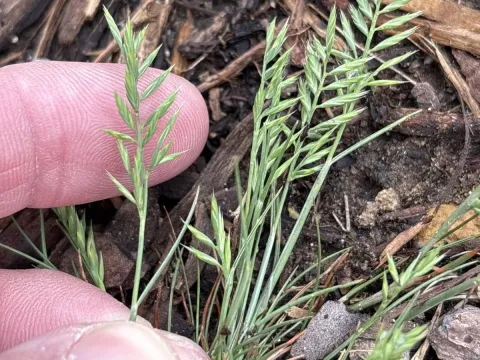
Sixweeks fescue
Festuca octoflora
Sixweeks fescue (Festuca octoflora) is an annual grass species known for its rapid development cycle. In agricultural settings, it is typically sown during the early spring or late autumn, depending on regional climate conditions and the intended use of the crop.
What the section contains
Sixweeks fescue
The seeds are small, necessitating a shallow seeding depth of no more than 1 to 2 centimeters to ensure successful germination. Proper soil contact is essential, and light harrowing or rolling after sowing can significantly improve emergence rates.
Recommended seeding rates generally range from 10 to 12 kilograms per hectare, depending on the purity and germination percentage of the seed lot. Maintaining uniform plant density is critical to minimize weed competition during the early stages of growth.
Before sowing, it is advisable to test the soil for nutritional deficiencies. While the species is hardy, adequate nitrogen availability during the initial growth phase will support better canopy establishment and forage production.
The crop is often used in restoration or erosion control projects, where it can be overseeded with other native grasses. Sowing should be timed to coincide with expected precipitation to avoid the need for supplemental irrigation, which may not be cost-effective for this species.
Belonging to the Poaceae family, Sixweeks fescue is highly valued for its ability to thrive in challenging environments. It is naturally adapted to sandy, rocky, and poor-quality soils that are often unsuitable for more demanding agricultural crops.
The species has a high requirement for direct sunlight. It should be grown in open areas with minimal shading to prevent stem lodging and the development of moisture-related diseases that can compromise the health of the stand.
It prefers well-drained soils and exhibits poor tolerance for waterlogged conditions. Excessive soil moisture can lead to root rot and significant stand loss, so selecting sites with proper slope or drainage is vital for long-term success.
Temperature plays a key role in its phenology. While it is tolerant of a wide range of temperatures, it tends to flower earlier under heat stress. Managing the growth phase through appropriate site selection helps in extending the vegetative period for better biomass yields.
The species is generally low-input, requiring minimal fertilization compared to common cereal grains. However, responding to soil analysis by adjusting pH levels to near-neutral can enhance the overall vigor and nutrient uptake efficiency of the plants.
The primary threats to Festuca octoflora are pathogenic fungi, particularly those favored by high humidity. Powdery mildew can affect leaf tissue, reducing the plant's ability to photosynthesize and lowering its quality as forage material.
Rust diseases are also a concern, especially in regions with consistent summer rainfall. Monitoring for rust pustules and applying appropriate fungicides if necessary can prevent the disease from spreading rapidly through a dense stand.
Insects like aphids can cause significant damage by feeding on the sap of developing stems and leaves. If aphid populations exceed economic thresholds, timely application of targeted insecticides is recommended to protect the crop yield.
Soil-dwelling pests, such as larvae of certain beetles, may feed on the root systems, leading to stunted growth. Crop rotation and proper field hygiene are essential practices to break the life cycle of these pests and minimize reliance on chemical treatments.
Weed management during the stand establishment phase is critical. Early competition from invasive annual weeds can significantly reduce the vitality of Sixweeks fescue, making preventative measures such as site preparation highly important.
Harvesting for forage should ideally occur during the late boot to early flowering stage to ensure the highest nutritional value. Delaying harvest beyond this point leads to a decrease in protein content as the plant diverts energy into seed production.
If the crop is being harvested for seed, it is necessary to wait until the panicles reach maturity but before they begin to shatter. Given the species' tendency to disperse seeds naturally, timing is of the essence to avoid high yield losses.
Mechanical harvesting via combine or swathing is standard for seed production. Swathing followed by threshing allows for a more controlled moisture reduction process, ensuring the seeds remain viable and free from mold during storage.
Post-harvest cleaning is vital, particularly for removing light plant debris that may harbor fungal pathogens. Proper cleaning ensures high germination rates for future seeding cycles and increases the market value of the seed lot.
Stored seeds must be kept in cool, dry conditions with adequate aeration to prevent heating and spoilage. Maintaining a seed moisture content below 14 percent is essential for long-term storage viability in agricultural warehouses.