
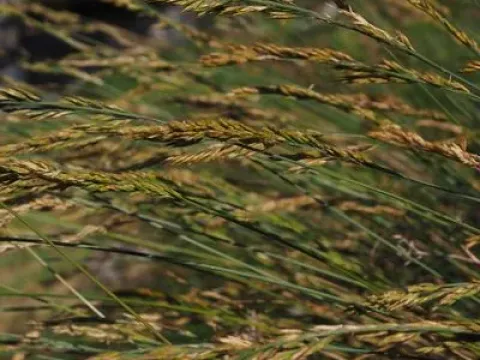
Smooth fescue
Festuca laevigata
Smooth fescue is typically sown in early spring as soon as the soil warms up to 5-7 degrees Celsius. Early seeding allows the plants to maximize the use of residual winter moisture, which is critical for obtaining uniform and healthy seedlings during the first year of establishment.
What the section contains
Smooth fescue
Fall sowing is also feasible in stable climates, although it requires precise timing to ensure seeds do not germinate before the onset of persistent frosts. Because of the risk of seedling winterkill, early spring remains the preferred window for most agricultural regions.
The recommended seeding depth is between 1 and 2 centimeters, depending on soil texture. On lighter sandy soils, slightly deeper placement is advisable, whereas in heavier loams, seeds should be closer to the surface to facilitate emergence and reduce physical stress on young sprouts.
Seeding rates vary depending on the intended use of the sward. For pure seed production stands, the rate is approximately 10–12 kg per hectare, while in forage mixtures, it is reduced to 6–8 kg to prevent shading and competition with legume components.
Rolling the field after sowing is a vital agronomic practice. This ensures firm contact between the seeds and the soil, accelerates moisture absorption, and significantly increases field emergence, establishing a robust foundation for the future crop.
Smooth fescue belongs to the Poaceae family and is a perennial grass characterized by high ecological plasticity. It thrives in moderately moist, fertile loamy soils with a neutral or slightly acidic pH, while also demonstrating notable tolerance to short-term drought conditions.
This crop is highly winter-hardy, allowing it to be cultivated in cold climates without significant risks of stand thinning. It resumes vegetative growth rapidly after snowmelt, efficiently utilizing early spring sunlight to develop dense vegetative biomass.
The plant is sensitive to prolonged waterlogging and standing water; therefore, low-lying areas prone to flooding are unsuitable for cultivation. Ideal sites are level fields with good drainage and proper aeration within the root zone.
Light availability is a primary factor for productivity: Smooth fescue is a light-demanding crop, and yields decline significantly under shaded conditions. It integrates well with alfalfa or clover in mixed swards, providing a high-quality nutritional base for livestock.
The crop responds well to nitrogen fertilization, which stimulates vigorous regrowth and foliage development. Strategic phosphorus and potassium applications contribute to root system strength and increase lodging resistance during the formation of generative shoots.
The yield of Smooth fescue depends on the frequency of mowing and the overall level of farm management. Under optimal conditions and proper fertilization, farmers can expect 3–4 high-quality cuts per growing season, resulting in significant dry matter output.
The productivity in dry matter typically ranges from 6 to 9 tonnes per hectare, depending on soil fertility and moisture levels. Peak production is usually achieved from the second to the third year of life, once the grass stand is fully established and mature.
Seed production is an important economic metric. In specialized seed-growing operations, yields can reach 300–600 kg of cleaned seed per hectare, making it a viable and profitable venture for commercial seed suppliers.
The nutritional quality of the forage remains consistently high throughout the season. Smooth fescue maintains its value even after the heading stage, giving producers flexibility in timing their harvests without experiencing drastic drops in feed quality.
The effective lifespan of a Smooth fescue stand is 7–10 years. During this period, yields remain stable provided the field receives annual fertilization and is subjected to correct mowing regimes that prevent plant exhaustion.
Common pests affecting Smooth fescue include cereal flies, such as the frit fly, which can damage young seedlings. Management strategies focus on optimal sowing dates and the application of insecticides during periods of peak adult insect activity.
Rust diseases are among the most frequent threats, particularly during warm and humid periods. To reduce the risk of fungal outbreaks, it is essential to avoid overly dense stands and practice proper crop rotation, which limits pathogen accumulation in the soil.
Powdery mildew may manifest as a white coating on the leaves during periods of drastic temperature fluctuations. Utilizing disease-resistant varieties and maintaining balanced mineral nutrition significantly enhances the plant's natural defense mechanisms against infections.
Wireworms pose a threat to the root system, especially when transitioning land from previous grain crop cycles. Deep fall tillage and the strategic use of soil-applied insecticides are effective measures to protect young grass stands from soil-borne larvae.
Overall field health is highly dependent on phytosanitary measures. Timely weed control prevents the spread of viral diseases, which are often transmitted by aphids and other sap-sucking insects that reside on non-crop vegetation.
The timing for hay harvest is determined by the crop's development phase: the early heading stage is optimal, as protein and sugar concentrations in the green biomass are at their highest. Delayed harvesting leads to stem lignification, reducing feed digestibility and livestock intake.
For seed production, harvesting during the wax-ripe stage is crucial, characterized by straw-colored panicles and firm seeds. Vigilant monitoring is required to prevent pre-harvest seed shattering, which can significantly reduce the final marketable volume.
Harvesting methods include direct combining or swathing. The latter is preferred in cases of uneven ripening or high weed pressure, as it allows seeds to achieve uniform maturity within the windrows before final threshing.
Post-harvest processing involves cleaning and drying seeds to a standard moisture content of 12–14%. Proper storage in dry, well-ventilated facilities ensures that high germination rates are maintained for the following planting season.
Green biomass intended for silage or haylage is harvested using forage harvesters. The process must be rapid to minimize nutrient losses caused by plant respiration and to ensure effective fermentation within storage structures.