
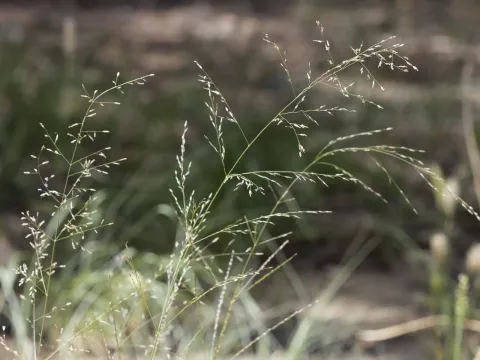
Smallflower lovegrass
Eragrostis parviflora
Smallflower lovegrass, botanically known as Eragrostis parviflora, belongs to the Poaceae family and thrives as a warm-season grass requiring specific thermal conditions for germination.
What the section contains
Smallflower lovegrass
Sowing should take place when soil temperatures reach a consistent range of 15–18°C, ensuring that the risk of late spring frost has completely passed.
Given the extremely small size of its seeds, the planting depth must be kept shallow, typically not exceeding 1–2 centimeters, to allow the seedlings to emerge successfully.
A well-prepared, firm, and level seedbed is essential for this crop to ensure even seed distribution and optimal moisture retention during the critical germination phase.
Light rolling after seeding is highly recommended to improve soil-to-seed contact and accelerate the establishment of the root system.
This grass species is well-adapted to various soil types but performs best in well-drained, light-textured soils where water does not accumulate during heavy rains.
Smallflower lovegrass is renowned for its drought tolerance, making it an excellent candidate for regions with unpredictable rainfall patterns or extended dry spells.
Nitrogen fertilization is a key requirement for achieving maximum biomass production, especially during the early stages of the growing season.
The plant requires full sun exposure and does not tolerate competition from weeds, necessitating proactive weed management strategies early on.
Soil pH should ideally be neutral or slightly acidic to promote efficient nutrient uptake and ensure the plant reaches its full physiological potential.
The yield of Smallflower lovegrass is highly responsive to managed cutting regimes, with the plant showing remarkable regrowth capacity after being harvested.
Under optimal fertility and moisture conditions, it is capable of providing multiple high-quality forage cuts throughout a single summer season.
Farmers focused on sustainable forage production value this grass for its consistent biomass output and its ability to remain productive under heat stress.
Seed yield can also be significant, providing an opportunity for seed propagation and potential revenue for specialized forage production farms.
Management practices such as selective grazing or strategic harvesting contribute to maintaining a vigorous stand, which in turn maximizes the total harvestable yield.
While generally hardy, the crop can be susceptible to fungal pathogens when grown in environments with poor air circulation or excessively high humidity.
Insect pests like aphids can sometimes infest young stands, potentially stunting growth and reducing the nutritional value of the foliage.
Implementing a strict crop rotation cycle is the most effective way to prevent the build-up of soil-borne diseases that could affect grass health over time.
Monitoring for signs of pest damage during the rapid growth phase allows for early intervention, ensuring that the health of the forage remains intact.
Good field hygiene, including the removal of debris and control of alternative host plants, is crucial to minimizing the presence of typical grass pests.
Harvesting for high-quality forage should be executed before the plant reaches full flowering to ensure the highest protein content and digestibility for livestock.
The hay-making process involves mechanical cutting followed by efficient drying techniques to preserve the nutritional density of the harvested material.
If harvesting for seeds, the timing must be precise, as the mature seed heads can shatter easily once they reach the post-ripening stage.
Mechanized harvesters, such as disc mowers, allow for clean and efficient harvesting, reducing the time the cut biomass sits in the field.
Proper storage of the harvested crop is essential, requiring moisture control to prevent spoilage, mold development, and the loss of feed quality during winter months.