
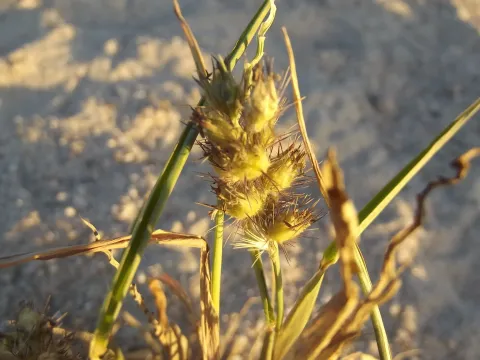
Slimbristle Sandbur
Cenchrus brownii
Slimbristle Sandbur (Cenchrus brownii) is a prominent annual grass belonging to the Poaceae family. It is recognized by its distinctive inflorescences, which consist of bur-like clusters, and its robust, fibrous root system that allows it to thrive in diverse environments ranging from coastal areas to agricultural fields.
What the section contains
Slimbristle Sandbur
Originally native to tropical regions of the Americas, this species has become naturalized in numerous tropical and subtropical zones worldwide. It favors open, sun-drenched habitats and is highly efficient at colonizing disturbed soils, making it a common sight in pastures, roadsides, and cultivated land.
Regarding its environmental requirements, the plant demands high solar radiation for optimal development. It is best adapted to well-drained, sandy, or light-textured soils. One of its key botanical traits is its high tolerance for warm temperatures, which allows it to maintain growth during periods when other grass species might enter dormancy.
Soil management for Cenchrus brownii involves ensuring proper aeration, as the root system is highly sensitive to waterlogging. Excessive soil moisture can inhibit root respiration, leading to stunted growth and increased susceptibility to soil-borne pathogens, even in warm climates.
From an ecological standpoint, the plant's strategy for spreading relies on the mechanical attachment of its sharp burs to the fur of animals or clothing. This high dispersal capacity makes it a plant that requires strategic monitoring to prevent its spread into undesired locations within a farming ecosystem.
While the plant produces a significant amount of vegetative mass, its forage value is restricted to its pre-flowering stage. Once the burs develop, the plants become unsuitable for grazing due to the mechanical damage the spiny burs cause to livestock. Therefore, controlled grazing cycles are essential if utilized as fodder.
The primary health threats to the crop include various rust fungi that thrive in humid tropical conditions. Pests such as aphids and specific beetle species can also inflict damage during the vegetative stage, potentially reducing overall biomass and yield quality if not managed with timely agricultural practices.