
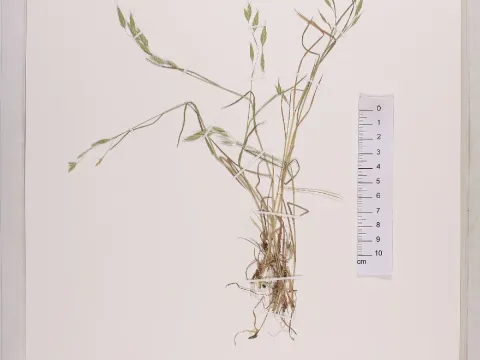
Slender brome
Bromus lepidus
Slender brome (Bromus lepidus) is an annual grass species within the Poaceae family. In agricultural practices, it is typically sown during the early spring period once the soil temperature is sufficient for germination.
What the section contains
Slender brome
The optimal sowing time is usually April, which allows the seeds to capitalize on spring soil moisture for rapid establishment. In regions with milder climates, late autumn sowing is also a viable practice to ensure early spring green matter production.
The seed rate is calculated based on the intended use, whether for hay or grazing. Standard row spacing of 15 to 20 cm is generally recommended to optimize plant stand density.
Post-sowing rolling is a critical agronomic step to improve seed-to-soil contact, which is particularly important in drier soil conditions to ensure uniform emergence.
Seeds should be planted at a shallow depth of 2–3 cm, as the species has relatively small seeds that may fail to emerge if planted too deep into the substrate.
Slender brome thrives in well-drained, fertile soils with a neutral or slightly acidic pH. It performs best on loam and sandy loam soils that possess good organic matter content.
The crop requires adequate sunlight for robust growth. Shaded areas should be avoided, as restricted light levels significantly reduce tillering capacity and total biomass productivity.
While moderately drought-tolerant, the plant requires consistent moisture during the early vegetative phase and stem elongation to achieve maximum yield potential.
Nitrogen fertilization is essential for maximizing vegetative output. Managed nutrient application promotes vigorous tillering and increases the nutritional quality of the forage.
Naturally adapted to European meadows and disturbed areas, it shows excellent resilience to variable temperate weather conditions, making it a stable choice for forage systems.
The primary agricultural use of slender brome is as a high-quality fodder source. When harvested at the early heading stage, it provides excellent nutritional value for livestock.
Yield performance is highly dependent on soil fertility and the timing of management practices. With optimal conditions, the crop can provide a consistent and reliable biomass harvest.
In grazing applications, slender brome is valued for its palatability and quick regrowth. However, as an annual grass, it requires management strategies like reseeding to maintain cover.
The plant exhibits high tillering, which helps fill gaps in meadow ecosystems and provides a dense sward that protects the soil from erosive forces.
The nutritional profile of hay derived from slender brome makes it a valuable component in mixed forage diets, contributing positively to overall animal performance.
Powdery mildew is one of the most common diseases affecting this crop, particularly under conditions of high humidity and dense canopy growth which reduces airflow.
Leaf rust also poses a threat to the crop, impacting the leaves and potentially reducing the quality of hay if left unmanaged during the mid-to-late growth stages.
Pests such as cereal flies and aphids can cause damage during the seedling stage. These infestations can lead to reduced stand density if not controlled early.
Integrated pest management, including crop rotation and careful nitrogen application, is recommended to minimize the reliance on chemical fungicides and insecticides.
Regular field scouting is essential, particularly during the stem elongation phase, to detect pest outbreaks or early disease symptoms before they cause significant yield loss.
Harvesting for hay should ideally occur at the beginning of the flowering phase. This timing ensures the best compromise between the volume of biomass and the concentration of nutrients.
Cutting should be performed in dry, sunny weather to facilitate rapid curing in windrows, which prevents the development of mold and maintains the nutrient content.
If the primary objective is seed production, harvest should be timed carefully once the panicles have matured but before the seed starts to shatter naturally.
Post-harvest processing involves thorough cleaning of the seed lot to remove contaminants and drying to a standard moisture level to maintain long-term seed viability.
Proper storage of hay in well-ventilated areas is critical to prevent spoilage and heat build-up, ensuring the feed remains palatable and safe for livestock throughout the winter.