
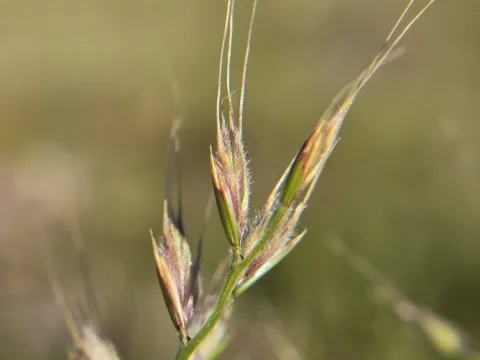
Small fescue
Festuca microstachys
Small fescue is an annual grass species that is best sown in early spring once the soil temperature consistently reaches 8–10 degrees Celsius.
What the section contains
Small fescue
In regions with mild winters, late autumn sowing is possible to achieve an early start to the vegetation period in the following season.
The optimal seeding rate for creating a productive pasture canopy is approximately 12–15 kg per hectare, depending on soil fertility.
Seeds should be placed at a shallow depth of about 1–2 cm to ensure rapid emergence and avoid exhausting the seed's energy reserves.
Compacting the soil immediately after drilling is a crucial step to improve seed-to-soil contact and promote uniform germination.
As a member of the Poaceae family, Small fescue is highly valued for its natural adaptation to drought-prone environments.
The crop thrives in well-drained, light-textured soils and is particularly sensitive to waterlogging, which can inhibit root respiration.
It prefers neutral to slightly acidic pH levels and can tolerate marginal soil fertility better than many other forage grass species.
This grass is highly efficient in heat management, making it an excellent choice for arid or semi-arid agricultural landscapes.
Its deep and extensive root system allows the plant to access subsoil moisture, which is vital for survival during dry summer spells.
The total dry matter yield is heavily dependent on soil nutrient availability and the management of grazing cycles during the season.
Small fescue provides a reliable source of green forage when other cool-season grasses may be entering dormancy due to heat stress.
Nitrogen fertilization programs significantly enhance biomass production, especially when synchronized with periods of peak vegetative growth.
The plant demonstrates high resilience to grazing pressure, which allows for sustained productivity throughout the spring months.
Yield stability is maintained by allowing adequate recovery time between grazing events or mechanical harvesting cycles.
While the plant is naturally resistant to many common diseases, high humidity levels can occasionally promote the onset of rust fungi.
Powdery mildew may develop in dense, poorly ventilated stands, though it rarely causes significant economic damage to the crop.
Insect pests, such as aphids and various grass-feeding larvae, can cause minor damage, but populations are usually kept in check by predators.
Integrated pest management strategies are recommended if infestation levels exceed typical thresholds during the seedling stage.
Proper crop rotation and avoiding overgrazing are the most effective cultural practices for maintaining a healthy and disease-free stand.
For hay production, the optimal harvest window occurs at the early heading stage to maximize both protein content and fiber digestibility.
Grazing management should focus on preventing the grass from reaching maturity, as forage quality drops rapidly once the seed head emerges.
A stubble height of 5–7 cm should be maintained during mechanical harvesting to protect the plant base and stimulate faster regrowth.
When harvesting for seed production, timing is critical; seeds should be collected at the dough stage to prevent pre-harvest shattering.
Post-harvest conditioning and thorough cleaning are essential to ensure the longevity of seed storage and high germination rates in future years.