
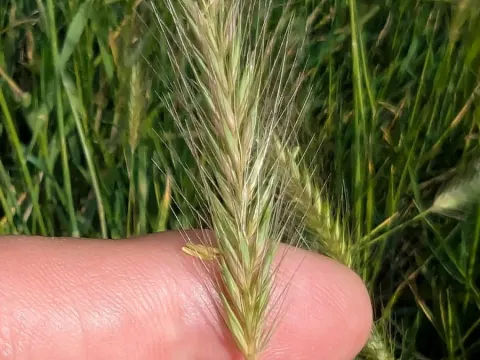
Meadow barley
Hordeum secalinum
Meadow barley (Hordeum secalinum) is a perennial grass species belonging to the Poaceae family. It is typically found in natural meadow ecosystems and is valued for its ability to adapt to specific moisture conditions.
What the section contains
Meadow barley
The plant thrives in moist environments and is commonly identified in coastal meadows and river valleys. It exhibits a distinct tolerance for saline soil conditions, which sets it apart from many other forage grasses.
Climatic requirements involve temperate zones where there is sufficient spring and autumn rainfall. While it can withstand periods of temporary waterlogging, the species prefers well-drained soils in transition zones.
Regarding soil, Meadow barley performs best in heavy clay or silty soils that retain moisture. Its root system is well-developed, allowing it to stabilize soil in flood-prone areas effectively.
Agronomic management of this species is usually limited to meadow improvement projects. It is rarely sown as a monoculture but is highly regarded as a functional component of biodiverse pasture mixtures.
Meadow barley is susceptible to various fungal pathogens, including rusts (Puccinia spp.) and leaf spots. These infections are more prevalent in humid seasons and can reduce the overall palatability of the forage.
Powdery mildew represents another common threat, especially in dense stands where airflow is restricted. It can weaken the plants and lead to early senescence of the foliage.
Common insect pests include cereal aphids and various types of leafhoppers. These insects not only consume plant sap but also act as vectors for various plant viruses that affect grass health.
Root diseases, often caused by water stagnation, can lead to the decline of the population. Proper land drainage management is critical to prevent such issues in improved pasture areas.
Control strategies for diseases involve minimizing chemical usage. Instead, farmers focus on maintaining optimal stocking densities and ensuring that the grass is harvested at the right time to prevent stress.
The primary use of Meadow barley is for forage production, either as grazed material or as part of hay mixtures. It provides early-season green mass, which is beneficial for livestock nutrition.
Harvesting for hay should be timed before the onset of flowering. Delaying the harvest results in higher fiber content and lower digestibility, which negatively impacts the nutritional value for livestock.
When used as pasture, rotational grazing is the recommended practice. This approach ensures that plants have a recovery period, allowing them to replenish root carbohydrate stores and maintain vigor.
Aftermath growth is typically moderate compared to high-intensity fodder grasses. However, it remains a reliable source of greenery during cooler parts of the growing season when other grasses might slow down.
Seed harvesting is possible but rarely prioritized by commercial farmers due to the species' tendency to shatter. Collection is usually conducted for ecological restoration projects or specialized seed production.