
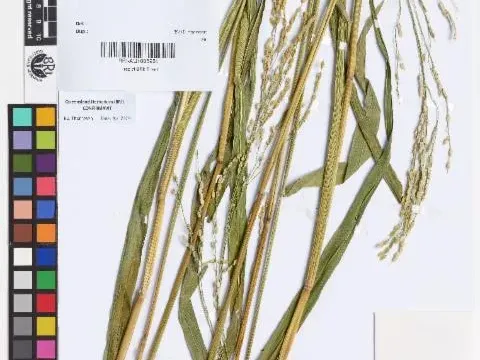
Medicinal rice
Oryza officinalis
Medicinal rice (Oryza officinalis) belongs to the Poaceae family. It is a wild relative of cultivated rice, recognized for its significant genetic diversity and its role in breeding programs to improve the resilience and pest resistance of modern rice varieties.
What the section contains
Medicinal rice
The species originated in the tropical regions of Southeast Asia. Due to its adaptation to wetland environments, it naturally thrives in areas characterized by high humidity and consistent precipitation, which dictates its primary cultivation zones.
The sowing period is generally synchronized with the onset of the monsoon season. Seeds are sown into prepared, moist seedbeds at a specific density to ensure optimal plant development and effective nutrient uptake throughout the early growth stages.
Botanically, it is characterized by robust tillering and a deep, resilient root system. This allows the plant to tolerate prolonged flooding, making it an excellent candidate for agricultural systems that utilize semi-aquatic cultivation techniques.
In addition to its role in plant breeding, this crop is being studied for its potential in sustainable agriculture, as it possesses inherent traits that allow it to compete effectively with weeds and adapt to varying environmental conditions.
Oryza officinalis requires a tropical climate with high solar radiation and consistent temperatures, typically ranging from 25 to 30 degrees Celsius. It is highly sensitive to frost and sudden drops in temperature, which can inhibit growth.
The soil requirements involve alluvial or clay-rich compositions that can maintain high water-holding capacity. Effective cultivation is best achieved in fields where water levels can be precisely managed to mimic natural irrigation cycles.
Soil pH should ideally remain slightly acidic to neutral. Nitrogen-based fertilization is essential during the vegetative phase to support rapid biomass development, while phosphorus and potassium are crucial for grain development.
Photoperiod sensitivity is an important biological aspect; the plant requires sufficient sunlight to ensure healthy development of the reproductive organs. Shaded environments can cause excessive stem elongation and lower reproductive success.
Humidity levels during the flowering stage should be relatively high to ensure successful pollination and seed setting. Dry winds during this critical phase can lead to spikelet sterility and reduced grain fill.
Common diseases affecting this species include rice blast (Pyricularia oryzae), which attacks leaves and panicles, potentially reducing crop yield significantly under conditions of high humidity and poor ventilation.
Pests such as the rice weevil and various rice bugs are major threats during the grain maturation period. They feed on the developing kernels, compromising the yield quality and the germination potential of the seeds.
Integrated pest management strategies are necessary, including the use of resistant lines, proper crop rotation, and the judicious application of fungicides and insecticides when thresholds are exceeded.
Stem borers can cause mechanical damage to the culms, leading to plant lodging and the disruption of nutrient transport. Monitoring with pheromone traps is recommended as a part of standard agronomic practice.
Maintaining clean field borders is essential to prevent the buildup of pest populations and the survival of pathogens in weed reservoirs that may migrate to the rice crop throughout the season.
Harvesting is performed when the grain reaches physiological maturity, typically characterized by hardening of the kernels and a reduction in moisture content to approximately 18-20% for optimal storage quality.
Mechanical harvesting using adapted combines is the standard approach to minimize grain losses. It is crucial to conduct the harvest during dry spells to prevent spoilage and ensure that the grain is clean and ready for immediate processing.
Post-harvest drying is essential to reduce grain moisture to safe levels (below 14%) to prevent the growth of molds and the risk of heating in bulk storage facilities.
Cleaning the grain using specialized equipment removes straw, empty husks, and other debris. This step is critical for maintaining the high standards required for seed certification and research purposes.
Storage management involves keeping the grain in cool, dry, and ventilated conditions to preserve its viability. Proper warehouse hygiene is necessary to protect the harvested material from stored-grain insects and rodents.