
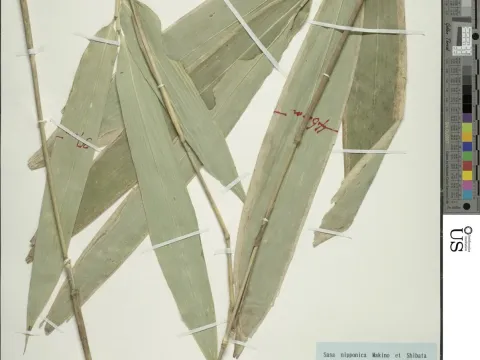
Sasa nipponica
Sasa nipponica
Sasa nipponica, belonging to the Poaceae family, is a distinct species of dwarf bamboo known for its low-growing, spreading habit. It is an evergreen perennial that creates lush, carpet-like ground cover in gardens and landscapes.
What the section contains
Sasa nipponica
Native to the forests of Japan, this bamboo thrives in cool, humid environments. It prefers dappled light or partial shade, as excessive direct sun can scorch its delicate, broad leaves, especially during the summer months.
The ideal growing medium for Sasa nipponica is a rich, well-draining soil that retains moisture without becoming waterlogged. Incorporation of compost or organic mulch is beneficial to provide necessary nutrients and maintain soil structure.
In terms of climate, the species is relatively hardy. While it can withstand moderate frost, it appreciates a layer of winter mulch in colder regions to insulate the rhizomes and prevent excessive cold stress during dormancy.
Agrotechnical management requires constant vigilance due to the plant's aggressive rhizomatous growth. The installation of vertical root barriers is the most effective way to keep the bamboo within its designated planting zone.
Spider mites are the most common pests affecting Sasa nipponica, particularly in dry and hot conditions. Increasing humidity around the foliage and regular monitoring are effective preventative measures against these infestations.
Root rot is a significant threat when soil drainage is poor. To mitigate this risk, ensure the planting area is well-drained and avoid over-watering, especially during the wetter months of the year when the plant is not actively growing.
Fungal leaf spots can occur if air circulation is insufficient within dense clumps. Proper spacing and regular thinning of the culms help maintain healthy airflow and reduce the humidity levels that favor fungal growth.
Sanitation practices, such as removing dead leaves and old canes in early spring, are essential for disease prevention. This helps eliminate potential breeding grounds for pests and pathogens before the new growth season begins.
If chemical interventions are necessary, systemic fungicides or acaricides should be applied strictly according to label recommendations. Prioritizing healthy soil conditions remains the primary method for maintaining robust plant health.