
Sasa palmata
Sasa palmata
Description
Growing requirements
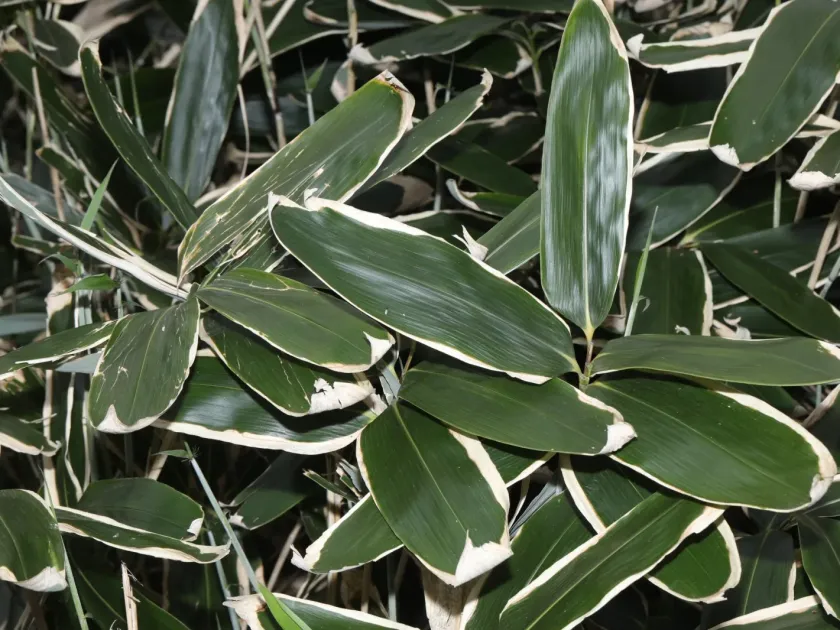
Sasa palmata, commonly known as the broad-leaved bamboo, is a robust member of the Poaceae family. Originating from the mountainous regions of Japan, this species is highly valued in horticulture for its spectacular, palm-like foliage.
The plant is characterized by its significant height and aggressive growth habit. Its rhizomatous root system allows it to spread rapidly, making it an excellent choice for ground cover in large areas where suppression of weeds is required.
Regarding soil requirements, Sasa palmata thrives in rich, moisture-retentive, and slightly acidic soils. Good drainage is essential, as the roots are susceptible to rot if submerged in stagnant water for prolonged periods.
The climate requirements include a preference for sheltered, partially shaded environments. Although it is quite cold-hardy for a bamboo species, it benefits from wind protection to prevent foliage damage during harsh winters.
Consistent moisture levels are crucial, especially during the active growing season. Mulching around the base helps retain soil humidity and suppress competition from other herbaceous plants.
Main diseases and pests
Sasa palmata is generally pest-resistant, but environmental stress can lead to susceptibility. Overcrowding and lack of airflow are the primary precursors to fungal issues such as leaf spot.
Pests such as spider mites may target the plant during hot, dry spells. Regular irrigation and maintaining healthy growth conditions significantly reduce the risk of such infestations.
Nutrient deficiencies, particularly nitrogen, can manifest as leaf chlorosis. Regular application of balanced fertilizers during the spring will ensure optimal color and structural integrity of the leaves.
To avoid long-term damage, it is essential to monitor for early signs of distress, including drooping leaves or brown margins, which usually indicate poor soil structure or insufficient hydration.
- Susceptibility to leaf spot in damp conditions.
- Spider mite damage during arid weather.
- Nutrient depletion in container-grown specimens.
Harvesting
In terms of usage, Sasa palmata is primarily utilized as an ornamental plant. It is frequently employed in landscape design to create dense, evergreen screens or as a dramatic textural element in Japanese-style gardens.
The broad, attractive leaves are sometimes harvested for artisanal purposes, including basket weaving or traditional food packaging, where their inherent freshness-preserving properties are highly appreciated.
Agricultural maintenance involves annual pruning. Cutting the stems back to ground level in early spring encourages a flush of fresh, vibrant foliage and maintains the health and vigor of the clump.
Due to its vigorous spread, installation of root barriers is standard practice in commercial and residential landscaping. These barriers prevent the bamboo from encroaching into neighboring lawn areas or flower beds.
Propagation is most successful through division of the rhizomes. This is best performed in the spring, ensuring each segment has healthy buds and a sufficient root mass for quick establishment.