
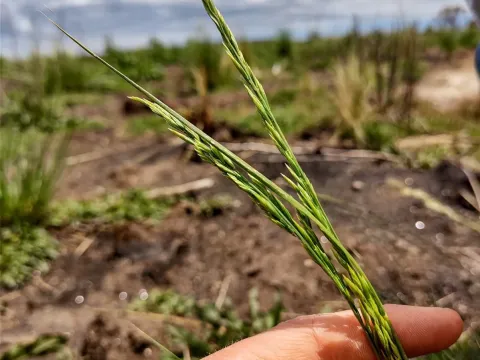
Festuca hieronymi
Festuca hieronymi
Festuca hieronymi is a resilient perennial grass species that is typically sown during the spring or autumn months to establish a strong root system.
What the section contains
Festuca hieronymi
Successful sowing requires well-prepared soil with optimal moisture levels to ensure the rapid germination of seeds and early seedling vigor.
The sowing depth is generally kept shallow, around 1 to 2 centimeters, ensuring the seeds are well-covered but have enough energy to emerge.
A sowing rate appropriate for the specific soil type and desired stand density is crucial for long-term productivity and ground cover efficiency.
After seeding, rolling the field is recommended to improve soil-seed contact and maintain adequate humidity for the developing young plants.
Belonging to the Poaceae family, this grass species thrives in a variety of environments, showcasing excellent environmental plasticity and hardiness.
It prefers well-drained soils ranging from loamy to sandy textures, performing best in environments with a near-neutral soil pH level.
The species is well-adapted to moderate climate conditions, demonstrating notable frost resistance and the ability to survive winter dormancy.
Sufficient sunlight is a key requirement for the development of its dense vegetative canopy, which prevents weed encroachment in pastures.
While tolerant of minor droughts, the species maintains higher biomass productivity when provided with consistent moisture throughout the growing season.
The primary agricultural application of Festuca hieronymi is as a reliable forage crop for intensive pasture grazing and hay production.
It offers consistent yields of green biomass, provided that the soil nutrient status is managed through regular nitrogen and phosphorus applications.
The plant exhibits rapid regrowth after grazing or cutting, making it an excellent candidate for managed rotational grazing systems.
Forage nutritional value remains high if the crop is harvested or grazed before the plants reach the advanced stages of lignification during flowering.
Productivity remains stable over several years, helping farmers maintain productive grasslands without the need for frequent re-seeding.
Common phytosanitary concerns include fungal pathogens such as rusts and powdery mildew, which often flourish in high-humidity microclimates.
Insect pests such as cereal leaf beetles or various bugs may occasionally impact the yield by feeding on the leaves and stems of the grass.
Cultural practices, such as maintaining proper spacing and avoiding overly wet field conditions, act as the first line of defense against disease.
Integrated pest management strategies are applied only when necessary to balance effective control with the ecological health of the grassland.
Regular mowing and management of grass height effectively suppress the buildup of pest populations and maintain a healthy, vigorous crop stand.
For high-quality hay, the crop should be harvested at the early heading stage, when nutritional concentration is at its peak for livestock.
The drying process is essential for forage quality, and mechanical raking is often used to ensure even moisture loss throughout the hay swath.
Storing the harvested material in a dry, well-ventilated environment prevents the risk of mold growth and maintains the palatability of the feed.
If harvesting for seed, timing is critical to ensure the seeds have reached physiological maturity before they begin to shed naturally.
Post-harvest cleaning and drying of seeds ensure a high-quality seed bank, which is vital for the viability of future seasonal plantings.