
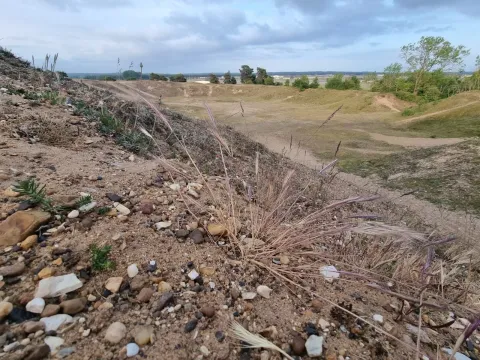
Festuca membranacea
Festuca membranacea
Festuca membranacea is a perennial grass species belonging to the Poaceae family. It is a highly specialized plant adapted to arid and semi-arid environments where water availability is a limiting factor for most vegetation.
What the section contains
Festuca membranacea
Originating from regions with sandy and nutrient-poor soils, this plant has evolved mechanisms to survive in harsh conditions. Its distribution spans across areas prone to desertification, where it acts as a pioneer species in colonizing bare ground.
The ecological requirements for Festuca membranacea include high solar radiation and excellent drainage. It thrives in soils that are predominantly sandy or gravelly, showing a remarkable tolerance to low fertility and soil salinity.
Botanically, the plant is characterized by its narrow, convolute leaf blades that minimize evapotranspiration, a common trait in xerophytic grasses. The root architecture is deep and extensive, enabling the plant to anchor itself in unstable, wind-blown sandy substrates.
Its primary agricultural and ecological value lies in soil conservation and phytoremediation. By stabilizing shifting dunes and protecting topsoil from wind erosion, Festuca membranacea serves as a vital component in land management strategies for dryland agricultural systems.