
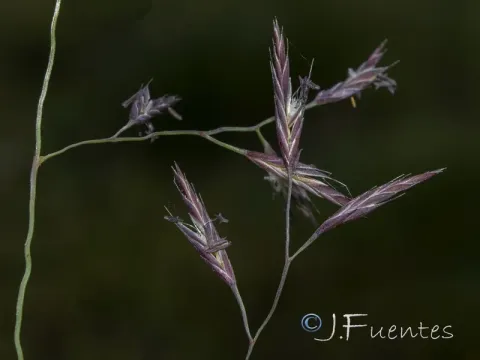
Festuca ampla
Festuca ampla
Festuca ampla is a perennial grass species that is best established during early spring or autumn, depending on local climatic conditions and moisture availability.
What the section contains
Festuca ampla
For optimal results, seeds should be sown at a shallow depth of approximately 1–2 centimeters, ensuring a firm seedbed to promote rapid germination and early root development.
The recommended seeding rate varies by intended use, typically ranging between 12 to 18 kilograms per hectare to establish a robust and dense sward from the beginning.
Rolling the field after sowing is a critical practice to improve soil-to-seed contact, facilitating consistent moisture uptake for the emerging seedlings.
Establishment may take time, as Festuca ampla often focuses on root development during the first year, requiring adequate weed control to reduce competition.
Belonging to the Poaceae family, this species is noted for its adaptability to a wide array of soil types, ranging from sandy loams to heavier clay soils.
It thrives in temperate environments where rainfall is adequate, but it possesses physiological traits that allow it to withstand moderate drought periods during mid-summer.
Festuca ampla prefers well-drained locations but can tolerate short periods of waterlogging, making it a versatile choice for diverse landscapes and agricultural sites.
Moderate levels of nitrogen fertilization are beneficial for encouraging vigorous spring regrowth, though the plant is generally efficient at utilizing soil nutrients.
The species exhibits excellent winter hardiness, remaining dormant throughout cold temperatures and recovering rapidly once spring temperatures rise above 5 degrees Celsius.
In well-managed pastures, Festuca ampla provides high yields of quality biomass that is palatable and nutritious for various classes of livestock.
The species is particularly valued for its strong regrowth capacity after grazing or mechanical mowing, offering multiple harvests throughout the growing season.
Seed production requires careful monitoring, with harvesting performed when the inflorescences show signs of maturity, typically identified by a change in color.
When used for hay production, harvesting should occur at the late boot to early flowering stage to balance forage quantity with overall nutritional value.
Long-term yield stability is achieved through rotational grazing and avoiding overgrazing, which allows the plant to replenish its root energy reserves effectively.
Common phytosanitary issues include rust diseases and leaf spot fungi, which are often triggered by high humidity levels and poor airflow within the canopy.
Insect pests, such as aphids and grass-feeding larvae, may cause localized damage to foliage, potentially impacting the overall photosynthetic capacity of the stand.
Root pathogens can become a concern in compacted or poorly drained soils, leading to thinning of the sward over several years of intensive use.
Effective management includes maintaining proper stand density and ensuring adequate fertility, which boosts the plant's natural resilience against common diseases.
Regular field scouting during peak growing periods is essential for the early detection of pests and pathogens, allowing for timely and targeted interventions.