
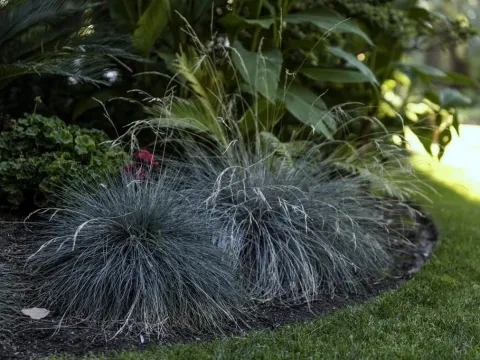
Festuca brevis
Festuca brevis
Festuca brevis is a perennial grass species belonging to the Poaceae family. It is a highly resilient plant native to alpine environments, adapted to survive in harsh, high-altitude climates where temperatures can fluctuate dramatically.
What the section contains
Festuca brevis
Sowing typically takes place in early spring once the ground has thawed and temperatures are consistently above freezing. In its natural range, the plant relies on seed dispersal during the short summer months to ensure the next generation of growth.
The plant has a slow initial growth phase, which requires careful weed management during the establishment year. Seeds should be sown at a shallow depth of 1–2 cm to ensure optimal germination rates without exhausting the seed's energy reserves.
When incorporating Festuca brevis into pasture mixes, it is important to match it with companion species that have similar environmental needs. This creates a balanced ecosystem that thrives even in nutrient-poor or rocky terrain.
Using precision sowing equipment is recommended to ensure even distribution of the small seeds across the field. Adequate soil contact is critical for success, particularly in dry or exposed mountain environments.
Festuca brevis requires well-drained, porous soil to thrive. It is particularly well-suited for rocky or sandy loams, where its root system can penetrate deeply to provide stability and access available moisture.
This grass is highly sun-loving and performs best in open, unobstructed areas. It does not tolerate shade well, as reduced light levels lead to weaker stems and decreased biomass production over time.
The plant demonstrates remarkable cold tolerance, making it an ideal choice for regions with long, severe winters. It remains dormant during the cold season and initiates rapid growth as soon as the snow melts and light levels increase.
Soil nutrient management should focus on phosphate and potassium supplementation to support root development and winter hardiness. Excessive nitrogen fertilization should be avoided as it may promote overly succulent growth that is susceptible to frost damage.
While moderately drought-tolerant, Festuca brevis requires adequate moisture during the early vegetative phase to establish the dense turf that makes it so effective for soil conservation on slopes.
The primary agricultural use of Festuca brevis is as a high-quality forage grass for mountain livestock. It is valued for its nutritional profile, which remains high even in difficult conditions, making it a reliable feed source.
In terms of biomass, yields are modest but consistent. Its main value lies in its longevity and ability to maintain a dense, protective ground cover that prevents soil erosion on vulnerable mountain terrain.
Festuca brevis is often used in restoration ecology projects to stabilize hillsides and disturbed land. Its extensive and fibrous root system effectively binds soil particles together, acting as a natural buffer against runoff and erosion.
Seed production is manageable and can be harvested once the seed heads reach a uniform color. Careful handling during the threshing process is required to ensure the seeds are not damaged during harvest.
As a pasture plant, it withstands controlled grazing well. Its ability to regrow from its base allows for sustainable management of high-altitude grasslands without depleting the stand.
Fungal diseases, such as rusts, can become an issue in periods of high humidity or poor air circulation. Maintaining the correct planting density is the most effective preventative measure against these pathogens.
Pests, particularly grass-feeding insects, can affect young stands. Monitoring fields during the early stages of growth is essential to ensure that populations of pests remain below the threshold that would cause significant economic damage.
Root rot is primarily a symptom of poor site selection, specifically where water remains standing. Ensuring good site drainage is the best way to prevent this disease from taking hold in a pasture.
Integrated pest management, including crop rotation and the use of resistant seed varieties, can help minimize the need for chemical interventions, preserving the ecological health of the grassland.
Regular field inspections allow for the early detection of localized outbreaks, enabling farmers to take targeted action rather than resorting to large-scale chemical applications.
Harvesting for hay should be timed to capture the grass at its peak nutritional value, typically at the early heading stage. This provides the best balance of protein and digestible fiber for livestock.
For grazing, rotation management is key. Allowing the stand to recover between grazing periods ensures that the plant stores sufficient energy for the following season, promoting long-term persistence in the field.
When harvesting for seed, the timing should be precise to avoid shattering. Harvesting at the stage of physiological maturity ensures the highest germination rates for the following year's crop.
Proper drying is essential for long-term storage of seed. Reducing moisture levels to below 14% prevents heating and microbial growth, which can destroy the viability of the seed stock.
Post-harvest management, such as light harrowing, can help remove dead plant material and stimulate new growth, thereby improving the overall health and vigor of the stand for the next cycle.