
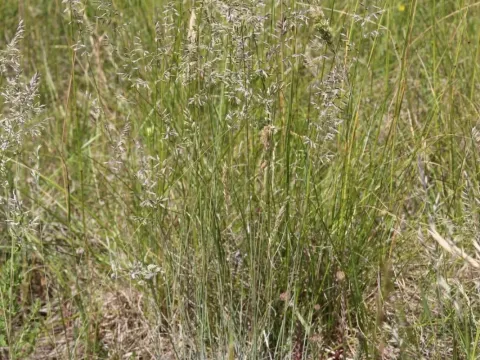
Festuca marginata
Festuca marginata
Festuca marginata is a perennial grass species belonging to the Poaceae family. Sowing is typically carried out during the spring period once the soil temperature is stable to promote germination.
What the section contains
Festuca marginata
Soil preparation is crucial for success, requiring a fine seedbed to ensure proper soil-to-seed contact. Seeds should be sown at a depth of approximately 1 to 2 centimeters to prevent desiccation.
Standard seeding rates range from 12 to 15 kg per hectare, depending on the desired density and local conditions. Since the initial establishment phase is slow, early weed control is essential for the crop.
The grass requires adequate moisture levels during the first weeks post-sowing to build its root structure. Successful establishment leads to a dense, robust turf that can withstand seasonal transitions.
Fertilization at sowing, particularly with phosphorus, helps stimulate early root development. This sets the foundation for a productive lifespan of the perennial stand.
This grass thrives in well-drained soils and shows a preference for loamy textures. Festuca marginata is highly adaptable to various soil types, including those with moderate nutrient levels.
The plant demonstrates remarkable cold hardiness, making it suitable for regions with harsh winters. It manages temperature fluctuations well without losing its vegetative integrity.
Moisture availability is key, although the species is somewhat drought-tolerant once fully established. It prefers full sunlight to reach its maximum forage production potential.
Poorly drained or waterlogged soils are detrimental to this species, as it is prone to root rot under anaerobic conditions. Maintaining proper soil structure is vital for health.
Nutrient requirements are moderate, but a balanced application of nitrogen stimulates regrowth after harvesting. The plant performs best in neutral to slightly acidic pH ranges.
Powdery mildew is a common issue for Festuca marginata, especially during periods of high humidity. It affects the foliage, potentially reducing the overall quality of the harvested hay.
Rust diseases can impact yields in warmer, damp seasons by damaging the leaf tissues. Monitoring the stand regularly is recommended to implement control measures before an outbreak occurs.
Pests such as grass flies and stem-boring insects may damage the stalks and growing points. Such infestations can thin the stand, requiring effective integrated pest management strategies.
Root pathogens thrive when drainage is poor, which is a major concern for long-term stand survival. Improving site drainage is the primary method to combat these soil-borne diseases.
Good grassland management, including proper mowing intervals, strengthens the plant's natural resistance. By maintaining a vigorous stand, the risk of disease and pest pressure is significantly reduced.