
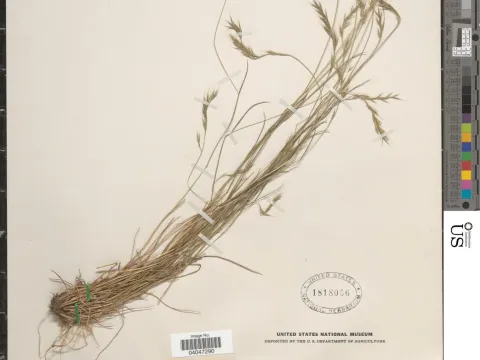
Antuco fescue
Festuca antucensis
Antuco fescue (Festuca antucensis) is a perennial grass species belonging to the Poaceae family. It is native to the high-altitude regions of the Andes, primarily found in Chile and Argentina, where it thrives in alpine environments characterized by harsh climatic conditions.
What the section contains
Antuco fescue
The plant is highly adapted to mountain ecosystems, forming dense tufts that stabilize the soil and prevent erosion. Its robust root system allows it to extract nutrients from shallow, stony, and nutrient-poor soils, making it a critical pioneer species in high-altitude terrain.
Morphologically, the species features narrow, often folded leaves with a coarse texture, which serves as an adaptation to minimize water loss under high solar radiation and strong wind exposure. This structural integrity allows the plant to maintain growth during unpredictable alpine seasons.
The environmental requirements for Antuco fescue center on excellent soil drainage and exposure to open light. While it is tolerant to nutrient-deficient soils, it performs best in mineral-rich substrates common in volcanic or mountain regions where air circulation is high.
In agricultural practice, this grass is valued for its hardiness as a forage source for extensive grazing systems. Although its palatability is moderate compared to lowland grasses, it provides essential nutritional support for livestock in environments where higher-yielding crops cannot survive.
The primary threats to Festuca antucensis include fungal pathogens, particularly rust and smut, which can infect the foliage during humid conditions or unseasonable temperature fluctuations. These diseases can negatively impact the photosynthetic capacity of the grass tufts.
Insect pests such as grasshoppers and soil-dwelling larvae are potential threats, especially during years of high population density. These organisms can cause significant defoliation or root damage, undermining the resilience of the stands.
Overgrazing represents a severe anthropogenic threat. If the stocking density is not managed correctly, the perennial nature of the grass is compromised, leading to a decline in regrowth vigor and allowing invasive or less desirable weeds to colonize the area.
To maintain healthy stands, land managers should implement rotational grazing practices. This allows the plant to recover its carbohydrate reserves, ensuring long-term sustainability of the pasture during the vegetative cycle.
Environmental stress, such as prolonged drought combined with frost, can weaken the plants, making them more susceptible to opportunistic secondary infections. Maintaining a diverse vegetation structure remains the most effective strategy for mitigating biological threats.