
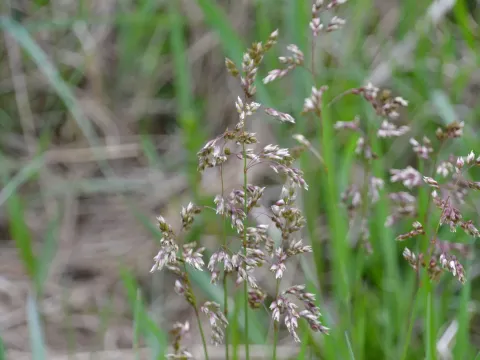
Anthoxanthum hirtum
Anthoxanthum hirtum
Anthoxanthum hirtum is a perennial grass species belonging to the Poaceae family. Sowing is best performed in late autumn or early spring, ensuring that seeds are placed at a shallow depth of 1–2 centimeters to ensure optimal germination rates.
What the section contains
Anthoxanthum hirtum
Initial establishment of the crop is slow; therefore, it is vital to provide adequate soil moisture throughout the seedling phase. Controlling weed competition during the first year is essential to prevent the crop from being outcompeted by more aggressive species.
Commercial plantations are typically established in rows with 30–45 centimeters of spacing. This layout facilitates mechanical weeding and promotes healthy airflow, which is critical for reducing the risk of fungal diseases.
If sowing in the spring, seeds should undergo stratification to break dormancy. This process results in more uniform germination and ensures a consistent plant density across the field.
Vegetative propagation via rootstock division is an alternative method for rapidly establishing new plots. This method is particularly useful for smaller fields where maintaining the purity of the variety is a priority.
The plant thrives in moderately moist, well-drained soils. It prefers loamy or sandy-loam compositions with a neutral to slightly acidic pH level, which matches its natural habitat in meadows and forest edges.
Anthoxanthum hirtum exhibits high frost resistance, making it suitable for regions with harsh winters. It does not require special winter protection, as it remains dormant until the arrival of spring temperatures.
While the species is relatively shade-tolerant, optimal growth and aromatic compound production occur in full sun to partial shade. Exposure to sunlight is necessary for the synthesis of coumarin, the compound responsible for its unique aroma.
Moderate nitrogen fertilization can boost vegetative mass production, although excessive application should be avoided to maintain the chemical profile of the plant. Potassium-rich fertilizers can help strengthen the plant's structural integrity.
Regular maintenance, including shallow inter-row cultivation, prevents soil compaction and encourages the growth of underground rhizomes, which are crucial for the long-term survival of the plantation.
The primary economic value of this crop lies in its biomass, which is rich in aromatic substances used in the food and herbal medicine industries. Yields are stable when irrigation and nutritional requirements are properly met.
Under favorable climatic conditions, it is possible to harvest two cuts per growing season. The first harvest should take place during the heading phase, when the concentration of aromatic oils reaches its peak.
Proper management allows for a productive lifespan of 5–7 years before the stand requires rejuvenation. Over time, root density may become excessive, requiring mechanical thinning or reseeding to maintain output.
The biomass of this species is sometimes utilized as an additive in high-quality hay mixtures, as its aroma can improve the palatability of fodder for livestock during the winter months.
Timely harvesting is essential to avoid the loss of biomass quality. If the plant is allowed to mature fully into the seed-bearing stage, the concentration of aromatic compounds in the leaves will naturally decline.
Fungal diseases such as rust and powdery mildew are the most common threats, especially during periods of high humidity and poor air circulation. Providing adequate spacing between plants is the best preventative measure.
Pests like grass-feeding flies and aphids can damage young tissues, causing stunted growth. Integrated pest management, including regular crop monitoring and biological control, should be prioritized over chemical applications.
Root rot is a concern in heavy, waterlogged soils. Ensuring good drainage during the field selection and preparation stages is vital to preventing the degradation of the rhizome system.
Weeds, particularly perennial species with deep root systems, can pose a significant threat. Early-stage weeding is crucial, as the grass is sensitive to competition until its root system is fully developed.
Maintaining a clean field after harvesting by removing excess debris helps reduce the overwintering population of pathogens, thereby decreasing the risk of infection in the following growing season.
Harvesting is performed using standard mowing equipment. It is critical to ensure that mower blades are sharp to provide a clean cut, which promotes faster recovery and secondary growth of the plant.
Drying the harvested biomass should be conducted in shaded, well-ventilated areas. Direct sunlight must be avoided to prevent the evaporation of volatile aromatic oils, which are highly sensitive to heat.
The drying process should keep temperatures between 35 and 40 degrees Celsius. This ensures moisture removal while preserving the delicate chemical properties of the raw material.
Once dried, the biomass is typically processed by baling or packaging. Storage should occur in cool, dry, and dark conditions to ensure that the aroma remains intact for commercial distribution.
Seed harvesting requires careful timing, as the seeds are prone to shedding once they reach maturity. Using specialized collectors or early harvesting can help minimize yield losses during the seed collection process.