
Yushania
Yushania Keng f.
Yushania is a genus of perennial evergreen plants belonging to the grass family (Poaceae) and the bamboo subfamily. Naturally occurring mainly in the mountainous regions of East and Southeast Asia, including China, the Himalayas, and Taiwan, these plants thrive at high altitudes where they form dense thickets.
What the section contains

Yushania
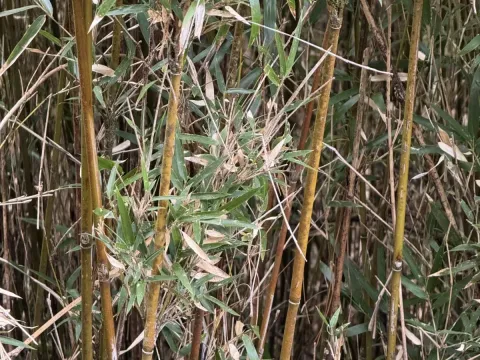
The culture is characterized by a sympodial rhizome growth pattern, which prevents the invasive spreading often seen in other bamboo species and allows for the formation of tight, compact clumps. The culms are upright with distinct nodes, from which lateral branches with narrow lanceolate leaves emerge.
This species has specific environmental requirements: it prefers a cool, humid climate and well-drained, organic-rich soil with a slightly acidic to neutral pH. Yushania is known for its ability to withstand light frosts, making it a viable candidate for cultivation in temperate regions with mild winters.
In terms of economic utility, Yushania is primarily prized as an ornamental plant, perfect for privacy hedges and landscaping in East Asian-style gardens. Furthermore, certain species are utilized in craft production, lightweight tool manufacturing, and serve as an essential food source for wildlife in their native habitats.
Agricultural management requires consistent irrigation during dry spells, the application of balanced mineral fertilizers at the start of the growing season, and regular pruning of older, woody culms. Proper care ensures the plants develop aesthetically pleasing clumps that are naturally resilient against weed competition.
The main phytosanitary challenges for Yushania involve fungal pathogens caused by excessive soil moisture or poor air circulation within overly dense plantings. Common pests include spider mites and aphids, which may infest young foliage when air humidity levels drop significantly.