
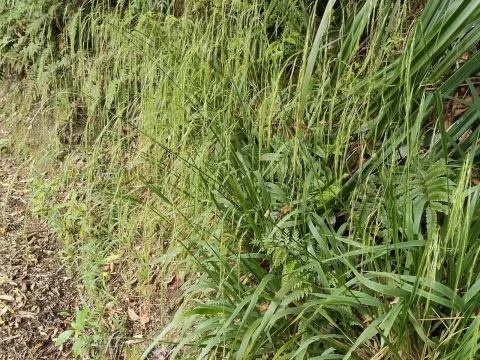
Ehrharta diplax
Ehrharta diplax
Ehrharta diplax is a perennial grass species belonging to the Poaceae family. It is native to temperate regions and is particularly noted for its presence in New Zealand's diverse ecosystems, where it thrives in natural grassland habitats.
What the section contains
Ehrharta diplax
This crop requires well-drained, fertile soil to reach its full yield potential. While it exhibits tolerance to varied soil types, it performs best in soils with adequate moisture retention, making it suitable for regions with consistent rainfall patterns.
Climate requirements for Ehrharta diplax include mild temperatures without extreme frost events. It is a highly versatile species that displays notable shade tolerance, allowing it to be integrated into diverse planting environments, including sheltered slopes.
The botanical structure of the plant features dense tillering, which provides significant ground cover. This characteristic makes it an excellent choice for soil conservation efforts, as the root system effectively anchors the soil structure.
Economically, Ehrharta diplax is valued primarily as a high-quality forage grass. Its ability to regrow rapidly after defoliation makes it a sustainable component of rotational grazing systems, ensuring a continuous supply of nutritious fodder for livestock.
The primary threats to Ehrharta diplax stands are fungal infections, particularly rust diseases that manifest during periods of high humidity and stagnant air circulation within the canopy.
Pest pressures are generally manageable, but grass aphids and various leaf-feeding insects can cause damage during the active growing season. Regular field inspections are necessary to identify early signs of infestation.
Soil-borne pathogens may pose a risk if the drainage is poor. Root rot can occur in waterlogged areas, leading to decreased vigor and reduced biomass production over time.
Proper grazing management is crucial for pest and disease prevention. Overgrazing can weaken the grass, making it more susceptible to invasion by opportunistic weeds and secondary infections.
To maintain a healthy crop, producers should implement a balanced fertilization strategy. Ensuring that nitrogen and phosphorus levels are optimal helps the plants maintain a robust immune response against environmental stresses.