
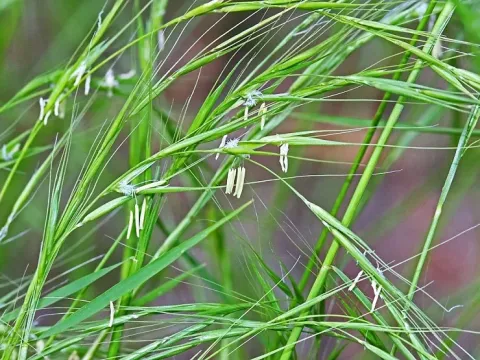
Ehrharta stipoides
Ehrharta stipoides
Sowing of Ehrharta stipoides is best scheduled during temperate periods to maximize germination success. Spring and early autumn are considered the most favorable windows for establishing new stands due to optimal soil moisture levels.
What the section contains
Ehrharta stipoides
Seeds should be sown at a shallow depth, ideally between 1 and 2 centimeters, to ensure they remain in contact with the soil while receiving adequate light for emergence. Careful seed placement is critical for uniform crop density.
Post-sowing rolling is highly recommended to improve soil-to-seed contact, which prevents the seeds from drying out on the surface and promotes faster root development.
Weed management during the initial establishment phase is crucial. As the seedlings are slow to develop initially, ensuring the area is free from competitive weeds allows the crop to establish a strong root system.
For oversowing into existing pastures, broadcasting combined with light harrowing is a standard method that provides sufficient soil coverage for the seeds to take hold within the existing sward.
Ehrharta stipoides is a member of the Poaceae family, recognized for its resilience and adaptability. Originating from regions in Australia and New Zealand, it has evolved to thrive in diverse environmental conditions.
The plant prefers well-drained soils but shows significant plasticity, capable of performing well across a wide range of soil types from sandy to loamy textures.
It displays a good tolerance for varying soil pH levels, making it a reliable choice for less-than-perfect agricultural lands. It also exhibits moderate shade tolerance, allowing for integrated use in agroforestry systems.
Ehrharta stipoides possesses an extensive root system, which contributes to its notable drought tolerance. However, providing supplemental irrigation during prolonged dry spells can significantly enhance its growth rate and yield.
The grass is known for its ability to form a thick, dense sward, which protects the soil surface from erosion and maintains productivity even under grazing pressure.
The productivity of Ehrharta stipoides depends heavily on soil fertility and management intensity. When managed correctly, it provides a consistent supply of palatable biomass throughout the grazing season.
It is valued as a high-quality forage crop. Its palatability to livestock, combined with its nutritional content, makes it a preferred species for pasture improvement programs.
Rotational grazing systems are the most effective way to harvest the biomass. This approach allows the plants to rest and recover, maintaining the long-term health and vigor of the pasture.
Yields can be significantly improved through the strategic application of fertilizers, particularly nitrogen, which encourages vegetative growth and ensures high dry matter production.
When grown in mixtures with legumes, the forage quality improves, as the nitrogen fixation provided by the companion crops enhances the overall productivity of the stand.
Major threats include soil-borne pests that can affect root development and various leaf-feeding insects that may reduce the photosynthetic area of the plants during peak growth stages.
Fungal diseases, such as rusts, can become an issue in environments with high humidity and poor air circulation, necessitating regular monitoring of the pasture health.
Overgrazing is a significant risk factor, as it depletes the plant's energy reserves and creates gaps in the sward, which invites opportunistic weeds to invade the pasture.
Maintaining a balanced grazing regime is essential to prevent degradation. Ensuring the sward is not stressed by continuous heavy traffic helps keep the stand competitive against weeds.
If pest pressure exceeds acceptable thresholds, selective insecticides may be used; however, focusing on cultural practices such as nutrient management and grazing intervals remains the primary defense.