
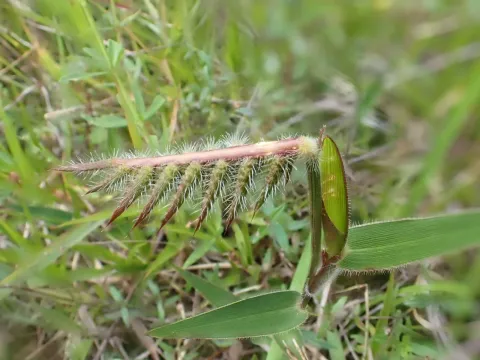
Echinolaena
Echinolaena
Echinolaena is a perennial grass that typically propagates vegetatively or through seeds at the onset of the rainy season. Optimal sowing times coincide with periods of consistent soil moisture, when air temperatures remain stable above 20-22 degrees Celsius.
What the section contains

Echinolaena
When used as a pasture crop, seeds are sown into prepared, well-tilled soil. It is crucial to ensure good seed-to-soil contact, as the small seeds of this culture are sensitive to desiccation in the topsoil layer.
In its natural habitat, the plant often propagates through self-seeding, yet in agricultural settings, row seeding with 30-45 cm spacing is recommended. This promotes better root system development and increases the tillering capacity of individual plants.
After sowing, it is advisable to lightly compact the field to improve capillary water rise to the germination zone. Early sowing allows plants to gain sufficient vegetative mass before the onset of high-intensity solar stress.
In cases of overseeding existing pastures, seeds are introduced into the sod using direct seeding methods, after suppressing the growth of competing weed species to provide Echinolaena with necessary resources during the establishment phase.
Echinolaena belongs to the Poaceae family and prefers well-drained, fertile soils characteristic of tropical and subtropical zones. The culture demonstrates high adaptability to acidic soils, which are common in many regions of Brazil and Latin America.
The plant is heliophilic, developing best in open areas that are not shaded by tree vegetation. A lack of light results in reduced leaf coverage and a slowdown in overall biomass growth.
In terms of climatic conditions, Echinolaena thrives in warm and humid environments. Although it can withstand short periods of drought, prolonged water stress significantly reduces its nutritional forage value.
Soil nutrient requirements include an adequate level of phosphorus and potassium, which is critical for maintaining long-term stand health. On nutrient-poor soils, the application of complex fertilizers significantly enhances the regenerative capacity of the grass after grazing.
The temperature optimum for growth ranges from 25 to 30 degrees Celsius. As temperatures drop toward freezing, plant development virtually stops, limiting its use to frost-free regions.
The yield of Echinolaena depends directly on the intensity of pasture management and the availability of nutrients. Under favorable conditions, it forms a dense carpet, ensuring stable green mass production throughout the growing season.
Dry matter productivity varies depending on grazing frequency and the species diversity of the pasture. With rational grazing management, Echinolaena retains high nutritional density, making it a valuable component of grazing lands.
To maintain high yields, it is important to prevent overgrazing, which depletes carbohydrate reserves in the rhizomes and leads to thinning of the stand. An optimal management regime involves rotational grazing, giving plants sufficient time to recover.
Yield potential can be increased through nitrogen fertilization after each grazing cycle or mowing. This stimulates active tillering and rapid regrowth of shoots from dormant buds.
Average productivity levels allow this grass to be used as a foundation for cattle grazing in tropical zones where a resilient, load-bearing forage base is required.
Typical threats to Echinolaena include fungal leaf diseases that develop under conditions of high humidity and poor air circulation. Infections may manifest as leaf spots, reducing the photosynthetic activity of the plants.
Among pests, leaf-eating insects and caterpillars pose the greatest danger, capable of damaging large areas of pasture in a short time. Regular monitoring of crop health helps in implementing timely protective measures.
Improper grazing regimes create conditions for the expansion of weeds, which compete with Echinolaena for water and nutrients. Weed suppression is a vital element of the overall agronomic strategy.
Damage to the root system by soil-dwelling pest larvae can also lead to the death of individual sections of the stand. This usually occurs when the general balance of the pasture biocoenosis is disturbed.
Control measures include following crop rotation practices, timely mowing of uneaten residues, and the use of biological pest control methods to maintain the ecological safety of the forage.
Harvesting or utilization of Echinolaena is primarily carried out through livestock grazing. The grazing speed should be managed so that animals consume the mass before it enters the generative phase and becomes coarse.
In the case of hay production, harvesting is performed at the onset of the heading phase, when protein content and nutrient digestibility reach their maximum. Timely mowing ensures the high quality of the resulting fodder.
The cutting height is crucial for future regrowth. It is recommended to leave stubble at least 5-8 centimeters high to avoid damaging the growth points and to ensure rapid stand regeneration.
When producing silage, the biomass is wilted to the required moisture level. Echinolaena ferments well if the compaction and storage sealing technologies are followed, allowing for the storage of nutritious feed for the winter period.
Harvesting equipment should be calibrated for gentle handling of the soil surface to minimize root system damage. Regular cleaning of machinery from soil residues helps prevent the spread of weed seeds and diseases between fields.