
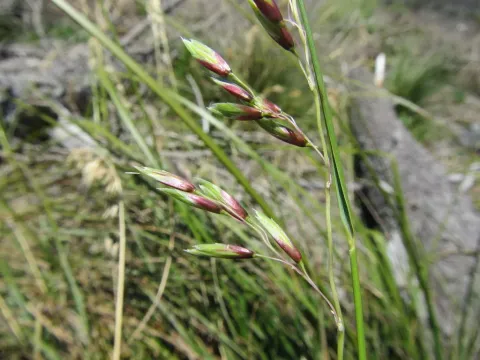
Ehrharta longifolia
Ehrharta longifolia
Ehrharta longifolia is a perennial grass species belonging to the Poaceae family. Native to the southern regions of Africa, this plant has gained attention in various agricultural sectors due to its resilience and ability to thrive in specific environmental niches.
What the section contains
Ehrharta longifolia
The optimal sowing time for Ehrharta longifolia is during the spring or early autumn, when soil temperatures are conducive to germination and establishment. It is critical to ensure that the soil has been cleared of competing weeds prior to planting to give the crop a competitive advantage.
Seeds should be planted at a shallow depth to ensure successful emergence, as deep burial can significantly reduce germination rates. Row spacing should be determined based on the intended use, with narrower rows often preferred for forage production.
Uniform soil moisture is vital during the first few weeks after sowing. Providing a consistent supply of water helps the seedlings develop a robust root system, which is essential for the plant's long-term survival and vigor in future seasons.
Once established, the plant exhibits a moderate rate of spread, making it suitable for areas where a stable, long-lasting ground cover is required. Regular monitoring during the initial growth phase ensures that the crop attains a uniform density.
Ehrharta longifolia thrives in well-drained, sandy to sandy-loam soils. It is particularly well-suited to soils that might be considered marginal for more demanding agricultural crops, showcasing its inherent hardiness and efficiency in nutrient uptake.
This species is highly light-dependent and performs best in open, sunny environments. Lack of adequate sunlight results in reduced tillering and significantly lower biomass production, which can impact the overall economic viability of the stand.
The species displays a notable degree of drought tolerance, allowing it to persist in regions with variable precipitation patterns. While it can survive dry spells, supplemental irrigation during peak growth periods will dramatically improve the forage yield and quality.
Temperature requirements for optimal development fall within the moderate range. While the plant can withstand short periods of cold, sustained frost can cause the foliage to die back, necessitating management strategies that protect the crown of the plant.
Proper aeration of the soil is essential, as waterlogged conditions can lead to root degradation. Agricultural management should focus on preventing soil compaction in pastures where this grass is grown to maintain optimal soil physical properties.
The primary agricultural application of Ehrharta longifolia is as a forage crop. It is highly valued for its ability to recover quickly after grazing, making it a reliable component for rotational grazing systems used in livestock management.
Yield potential is dependent on management practices, including fertilization and the frequency of harvesting. By timing harvests or grazing rounds correctly, producers can maintain a high-quality supply of green feed throughout the growing season.
Biomass productivity peaks before the reproductive stage begins. Managing the crop to remain in the vegetative phase ensures that the nutritional content, particularly protein levels, remains high for animal consumption.
Ehrharta longifolia is also utilized for soil stabilization and erosion control. Its extensive and fibrous root system makes it an excellent choice for planting on embankments and sloping land where soil stability is a primary concern.
- Excellent choice for permanent pasture improvement
- High-quality forage suitable for various livestock
- Superior erosion control for sloping landscapes
- Minimal input requirements compared to traditional grains
Like many grass species, Ehrharta longifolia is susceptible to various fungal pathogens if management practices create high-humidity environments. Leaf rusts and crown rots can occur if air circulation is poor or if the stand is allowed to remain overly dense.
Insect pests such as grasshoppers and certain species of aphids can cause significant damage to the foliage. Monitoring programs should be in place to detect early infestations before they result in substantial loss of green biomass.
Overgrazing poses a significant threat to the longevity of the stand. If the grass is grazed too short or too frequently, the plant's energy reserves in the roots are depleted, leading to a decline in vigor and eventual thinning of the pasture.
Competition from invasive broadleaf weeds can suppress the growth of Ehrharta longifolia. Strategic use of selective herbicides or controlled mechanical mowing can assist in maintaining the purity and productivity of the crop.
Disease management is best achieved through cultural practices rather than chemical intervention. Ensuring adequate drainage, maintaining optimal row spacing, and preventing overcrowding are the most effective ways to minimize the risk of pest and disease outbreaks.