
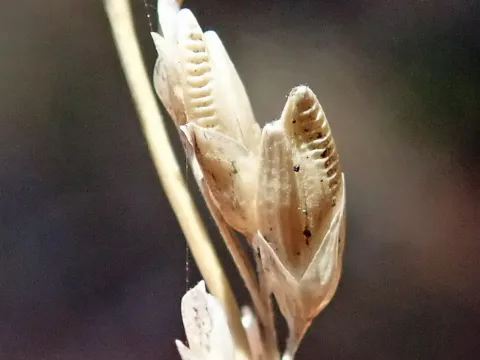
Ehrharta erecta
Ehrharta erecta
Ehrharta erecta, commonly known as panic veldtgrass, is a perennial grass species that exhibits robust growth characteristics. Sowing is typically performed in early spring or autumn to utilize natural soil moisture for optimal seed germination.
What the section contains
Ehrharta erecta
The seeds are small and should be sown at a shallow depth to ensure successful emergence. Broadcasting or light drilling are the preferred methods, ensuring the soil surface remains moist during the critical first stages of seedling development.
High seed viability allows for quick establishment, making this grass highly effective for rapid ground cover. However, due to its aggressive growth, farmers should maintain controlled sowing densities to avoid overcrowding and resource competition among plants.
When managed as a pasture crop, overseeding may be used to improve existing stands. The plant's ability to self-seed creates a reliable population cycle, which reduces the need for frequent replanting in favorable climates.
Proper spacing during sowing significantly influences biomass production. In intensive systems, ensuring consistent spacing allows for better air circulation, which in turn reduces the risk of fungal pathogens in the lower canopy.
Native to South Africa, Ehrharta erecta belongs to the Poaceae family. It is a highly adaptable species capable of growing in a wide range of soil conditions, ranging from well-draining sandy loams to slightly compacted urban soils.
One of the most notable traits of this grass is its remarkable shade tolerance. Unlike many other forage grasses, it thrives in environments with limited sunlight, making it suitable for mixed farming systems or shaded field margins.
The climate requirements favor temperate zones with mild winters. While the plant can withstand occasional drought due to its efficient root system, it flourishes best in areas with regular rainfall and moderate temperatures throughout the growing season.
Nutrient requirements are relatively modest, as the plant is efficient at scavenging for minerals in moderately depleted soils. However, moderate nitrogen application can significantly increase the nutritional value of the biomass for livestock feed.
- Excellent adaptability to diverse environments.
- High competitive ability against other weed species.
- Year-round growth in frost-free regions.
Ehrharta erecta is generally resistant to most common agricultural pests. Its physical structure and chemical composition make it less palatable to certain insects compared to other forage grasses, serving as a natural defense mechanism.
Diseases such as leaf spot and rust are the primary threats, particularly in high-humidity or poorly ventilated areas. These pathogens can cause significant foliage damage if moisture levels in the canopy are not managed through regular grazing or mowing.
From an ecological standpoint, the plant's aggressive spread can classify it as an invasive species in certain regions. Agricultural management must focus on containment, using strategies like strategic tillage or chemical control to prevent unintended spread.
Monitoring for signs of stress is crucial for maintaining stand longevity. If leaf yellowing or discoloration appears, it often signals improper soil drainage or nutrient deficiencies that need immediate correction to prevent further decline.
Integrated pest management (IPM) practices, including the use of resistant varieties and proper field hygiene, are recommended to maintain healthy stands. Removing infected organic debris during the winter period can effectively reduce the inoculum load for the following season.