
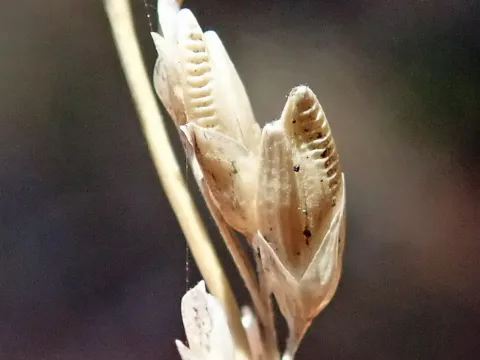
Ehrharta
Ehrharta
Sowing of Ehrharta is recommended during periods of optimal soil moisture, which in its native distribution areas typically occurs in autumn or early spring. The seeds exhibit high germination energy under moderate temperatures, allowing for successful establishment in cool weather conditions.
What the section contains

Ehrharta
Sowing depth should be minimal, as the seeds are small and require good contact with a moist substrate to effectively initiate root system development. A row-seeding method with spacing that ensures optimal pasture density is advised for best results.
An essential stage during pre-sowing preparation is thorough weed control, as young Ehrharta seedlings develop relatively slowly in the initial stages. Using high-quality seed material ensures uniform emergence and rapid canopy closure.
Optimal seeding rates are determined by soil type and the intended purpose — whether for intensive grazing or the restoration of degraded lands. Within an agroecosystem, the crop shows a high capacity for self-regeneration through natural reseeding.
The time until the first full exploitation of the pasture depends on vegetation rates, which are regulated by rainfall and the availability of nitrogenous compounds in the soil.
Ehrharta belongs to the Poaceae family and is a typical representative of South African flora, adapted to various ecological niches, including arid and moderately humid zones. Different species of the genus, such as Ehrharta calycina, demonstrate high plasticity regarding climatic conditions.
The crop prefers well-drained, sandy or loamy soils, although it is capable of tolerating temporary moisture deficits due to its deep root system. The plant grows successfully in both open, sunny areas and conditions of partial shade.
Agrotechnical requirements include maintaining a moderate level of soil acidity, as nutrient uptake efficiency drops significantly at extreme pH levels. The presence of adequate phosphorus in the soil is a vital factor that stimulates root system development.
The plant is well-adapted to low temperatures, making it suitable for early livestock grazing when other forage crops are still in winter dormancy. However, it is highly sensitive to prolonged waterlogging and stagnant water in the fields.
A biological feature of Ehrharta is its ability to efficiently utilize environmental resources, making it an important component for erosion control in ecologically vulnerable regions.
The productivity of Ehrharta pastures depends directly on grazing management and the application of mineral fertilizers, which stimulate vegetative mass regrowth. With proper pasture management, the crop provides a stable yield of green biomass throughout the long growing season.
Average yield figures vary depending on the specific plant species and the intensity of land improvement efforts. Ehrharta is valued for its high nutritional quality, especially in the tillering phase, when protein content in leaves reaches its peak values.
Economic use includes livestock grazing, hay production, or inclusion in grass mixtures for erosion control. A well-developed stand is capable of producing multiple cuts per season, provided timely moisture is available.
To maximize dry matter output, a rotational grazing system is recommended to prevent overgrazing, which depletes carbohydrate reserves in the plant's underground organs. Maintaining correct mowing height is a critical factor for stand recovery.
The crop demonstrates high competitiveness against weeds, which allows for maintaining yield at an acceptable level with minimal maintenance costs.
The main threats to Ehrharta stands are phytopathogenic fungi that develop during periods of high humidity and moderate temperatures. Leaf damage can lead to reduced photosynthetic activity and, consequently, a decline in forage value.
Pests, such as weevils and certain types of caterpillars, can cause damage to reproductive organs and seeds, reducing the crop's ability to reseed itself. An integrated protection system includes monitoring pest populations and applying biological control methods.
Improper grazing management is an agrotechnical threat leading to thinning stands and the replacement of Ehrharta with less valuable weed species. Overgrazing during early development phases is unacceptable due to the risk of young plant mortality.
For disease control, timely mowing of the grass is recommended, which disrupts the life cycles of most pathogens and contributes to the health of the pasture. Maintaining distance between different crop fields also helps minimize the spread of infections.
In regions of introduction, it is necessary to control the invasive potential of certain species to prevent uncontrolled spread of the plant outside agricultural lands.
Harvesting Ehrharta for hay or haylage should be carried out at the heading stage, before the stems become coarse, to maintain maximum nutrient concentration. Early harvesting ensures higher forage quality but may lead to a decrease in overall yield mass.
To ensure the longevity of the pasture, it is important to leave stubble of a certain height, which protects growth points from drying out and stimulates subsequent shoot regrowth. Optimal cutting height is typically 5–8 centimeters.
If collecting seed material, harvesting is conducted upon reaching technical maturity, when the majority of inflorescences acquire a characteristic color. Caution is needed, as seeds of some Ehrharta species are prone to shattering upon full maturation.
Post-harvest seed processing includes drying, cleaning of impurities, and storage in dry, well-ventilated rooms with controlled humidity. This allows for preserving high germination capacity over several seasons.
Using specialized harvesting machinery with a gentle threshing mode allows for minimizing seed damage and harvest losses when collecting from seed production fields.