
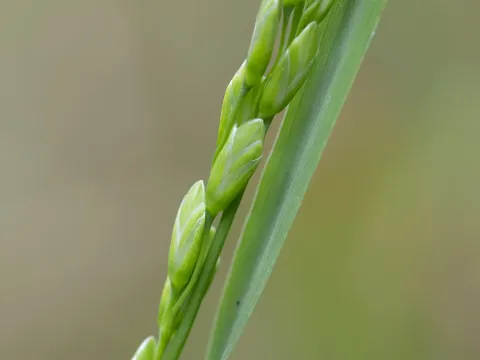
Ehrharta laevis
Ehrharta laevis
Ehrharta laevis is a perennial grass belonging to the Poaceae family. This species is biologically distinguished by its ability to thrive in specific environmental conditions characterized by variable rainfall patterns.
What the section contains
Ehrharta laevis
Native to Southern Africa, this grass has adapted to a wide range of habitats, primarily preferring open, sun-exposed areas. Its distribution is currently expanding in regions with compatible climatic profiles.
The crop thrives in well-drained, sandy, or loamy soil types. It is highly sensitive to waterlogging, which can cause root rot; therefore, selecting sites with excellent soil drainage is a fundamental requirement for successful establishment.
Regarding climate, Ehrharta laevis prefers moderate temperatures and is well-suited to Mediterranean-type climates. It exhibits significant drought tolerance once fully established, making it a reliable species for dry environments.
Optimal growth is achieved with high light intensity. Proper spacing during sowing is essential to prevent overcrowding and ensure each plant has access to sufficient sunlight for robust development.
The primary use of Ehrharta laevis is within livestock farming systems, where it serves as a nutritious pasture grass. It is highly valued for its ability to provide feed during periods when other grasses might be dormant.
Yield performance is heavily dependent on soil fertility and moisture availability. Regular management practices, including nitrogen fertilization, are recommended to maintain high production levels over several years.
When managed for hay production, harvesting should take place before the reproductive phase to ensure the nutritional density of the biomass remains high for livestock consumption.
The crop demonstrates excellent regrowth capacity following moderate grazing, which simplifies management in intensive pastoral systems.
Research into the biomass yield confirms that it is a viable alternative for improving agricultural productivity in regions where traditional forage crops face limitations due to soil or climate constraints.
The crop is susceptible to fungal diseases such as leaf rust and root pathogens if soil moisture management is neglected. Good drainage practices are the primary line of defense against these threats.
Pest pressures, primarily from aphids and larvae that feed on soft tissue, should be managed through integrated pest management strategies to avoid damage during the active growing season.
Weed infestation presents a major challenge during the establishment phase, as young seedlings can easily be outcompeted by aggressive weeds. Clean seedbeds and pre-emergent control are highly recommended.
Overgrazing poses a structural threat to the longevity of the stand. Implementing rotational grazing schedules helps preserve the root reserves of the grass and ensures long-term persistence.
Monitoring for signs of nutrient deficiency is also crucial, as weak plants are more vulnerable to pest and disease attacks in adverse environmental conditions.