
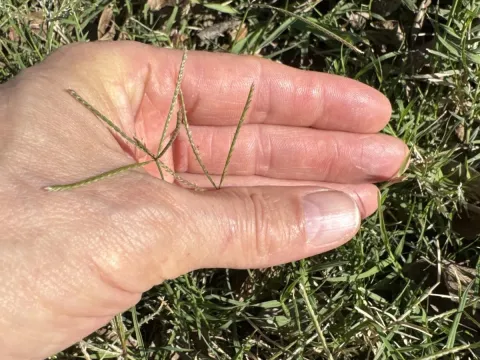
Cynodon mucronatus
Cynodon mucronatus
Cynodon mucronatus is a perennial rhizomatous grass belonging to the Poaceae family. Sowing is best carried out in the spring, once soil temperatures have consistently reached 15-18 degrees Celsius.
What the section contains
Cynodon mucronatus
Seeds should be sown at a shallow depth of no more than 2 centimeters in well-prepared, firm seedbeds to ensure optimal moisture contact. Proper soil contact is essential for uniform germination.
In addition to traditional seeding, vegetative propagation using rhizome cuttings is a highly effective method. This approach allows for rapid establishment on eroded slopes or disturbed soils where quick cover is required.
Due to its aggressive growth pattern, it is crucial to isolate the planting area from other cultivated lands to prevent the grass from spreading into undesired regions.
Early maintenance is critical; because the seedlings grow slowly at first, controlling weed competition during the establishment phase is essential for success.
The plant is highly heliophilous and thermophilic, thriving best in open, sunny environments. It is not shade-tolerant and will significantly reduce in vigor if deprived of direct sunlight.
Cynodon mucronatus is remarkably adaptable to various soil types, including sandy, loamy, and gravelly soils. It performs best in well-drained, fertile soils with a neutral pH level.
Its exceptional drought resistance is a defining feature, supported by a deep and complex rhizome system that enables the plant to access subsoil moisture during dry spells.
While the plant has a moderate tolerance to salinity, it performs poorly in waterlogged conditions. Adequate drainage is necessary to prevent root rot and ensure healthy development.
Strategic nitrogen applications during the growing season promote vigorous tillering and ensure quick recovery after grazing or harvesting for forage.
The biomass yield of Cynodon mucronatus is heavily influenced by soil fertility and moisture management. Under optimal conditions, the grass provides consistent forage throughout the season.
Farmers can expect several cuts per season, with total yields often ranging between 15 to 25 metric tons of green mass per hectare, depending on local climate conditions.
The nutritional profile of the grass is highly favorable for ruminants, especially when harvested during the early stages of maturity before the fiber content increases significantly.
In pasture management, the species demonstrates a strong ability to recover quickly from grazing pressure, making it an ideal choice for intensive livestock systems.
Enhanced irrigation practices in arid climates can significantly increase the total biomass production, cementing its status as a critical component of regional forage security.
Cynodon mucronatus is generally resilient against common plant pathogens, which reduces the necessity for routine fungicide applications and supports sustainable farming practices.
Some minor threats include insect pests like grass flies or larvae that target the root zone during the early developmental stages of the stand.
In humid or stagnant conditions, root rot or rust fungi may occasionally occur. These are typically managed through proper moisture control and maintaining healthy, vigorous growth.
Weed infestation during the initial establishment phase can pose a risk by competing for resources, necessitating vigilant monitoring and manual or mechanical control.
An integrated pest management approach, including crop rotation and proper timing of harvests, is usually sufficient to mitigate potential damage from these threats.
The timing of the harvest is the most significant factor in maintaining forage quality. Mowing should be conducted at the onset of flowering to maximize protein content.
Utilizing modern hay-making machinery, such as conditioners, helps accelerate the drying process, ensuring the retention of essential nutrients in the harvested grass.
For pasture usage, a rotational grazing system is highly recommended. This allows sections of the pasture to rest and regenerate, preserving the vitality of the rhizomes for future growth.
Seed harvesting should be performed after the spikes have matured and turned color, but prior to natural seed shattering, which requires precise timing.
Proper post-harvest management, including thorough drying and cleaning of seeds, is vital for maintaining high germination rates for future planting cycles.