
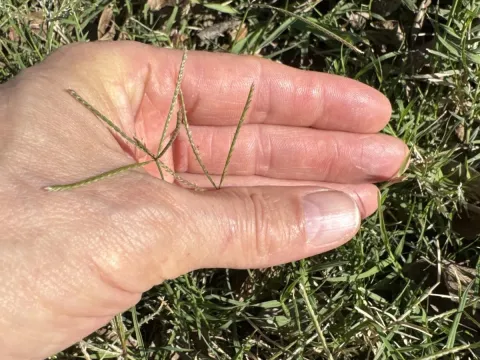
Cynodon affinis
Cynodon affinis
Cynodon affinis is a perennial rhizomatous grass species known for its resilience and ability to form dense sod. Propagation is typically achieved through vegetative planting of rhizome segments, which ensures rapid establishment in well-prepared seedbeds.
What the section contains
Cynodon affinis
The optimal time for planting is during the warm season when soil temperatures exceed 15 degrees Celsius. Ensuring good soil-to-rhizome contact is crucial for establishing a healthy root system and promoting vigorous early development.
Soil preparation should involve deep tillage to loosen the earth and facilitate deep root penetration. Clearing the area of aggressive weeds before planting allows the grass to establish without competition, leading to a more uniform and productive stand.
Spacing during planting significantly influences the speed at which a closed canopy is formed. Proper density is essential for preventing soil erosion, especially on sloping lands where the grass acts as an effective soil stabilizer.
After planting, lightly rolling the field helps to settle the soil around the rhizomes and conserve moisture. This practice is particularly beneficial in areas prone to dry spells shortly after the establishment phase.
This grass thrives in full sun and is highly tolerant of heat and drought, making it an excellent candidate for arid agricultural regions. It performs best in well-drained sandy or loamy soils but adapts well to diverse soil textures.
Cynodon affinis is known for its moderate tolerance to salinity, allowing it to be cultivated on lands that might be marginal for other crops. However, fertility levels should be monitored to ensure consistent biomass production throughout the season.
Nitrogen fertilization is key to maximizing green matter yield. Applying nutrients during the active growth phase stimulates tillering and recovery after grazing, which is vital for maintaining pasture productivity.
Temperature requirements are centered around warmth; the grass grows aggressively when temperatures are in the 20 to 30 degrees Celsius range. Its dormant period is triggered by cold weather, with limited growth occurring in sub-optimal conditions.
Water availability, while not strictly required for survival, directly dictates the yield. In large-scale operations, supplemental irrigation can dramatically increase the number of harvests per season and overall nutritional value of the forage.
The economic value of this species lies in its prolific biomass production. In managed systems, multiple cuts per season are possible, providing a consistent supply of quality feed for livestock throughout the warmer months.
Nutritional analysis shows that when harvested in the early flowering stage, the grass provides excellent protein and fiber content. This balance makes it highly palatable and beneficial for ruminant health, including cattle and sheep.
Yield stability is a hallmark of this species. Because it recovers quickly after being grazed or mowed, it serves as a reliable component of any rotational grazing system, minimizing the need for stored fodder during the growing season.
For best results, pasture rotation should be practiced to prevent overgrazing. By allowing sections of the field to rest and recover, farmers can sustain higher grazing pressure without degrading the soil or the grass stand itself.
The nutritional efficiency of the grass makes it a preferred choice for improving the weight gain of livestock. When properly managed, the forage supports sustainable weight gain and maintains herd vigor, reducing dependence on supplements.
Like many perennial grasses, this species is generally robust, but it can be susceptible to root rot in waterlogged conditions. Ensuring proper drainage is the most effective preventative measure against soil-borne fungal pathogens.
Pests such as aphids and grass-feeding insects can occasionally impact growth. While these pests rarely cause systemic failure, periodic monitoring helps determine if intervention is needed to protect the yield quality.
Weed control is primarily a concern during the first months of growth. Once the grass forms a thick sod, it is highly competitive and typically outcompetes most invasive plant species without the need for chemical herbicides.
Agricultural management should prioritize soil aeration and avoiding long-term saturated conditions. Regular maintenance, including light harrowing, helps keep the soil environment healthy and discourages the buildup of debris and pests.
While disease and pest pressure are generally low, integrated pest management practices should be followed if infestation levels exceed economic thresholds. This approach keeps input costs low while ensuring the longevity of the pasture.
Harvesting for hay should occur just as the plant begins to flower to capture the peak nutritional profile. Mowing too late results in lignified stems that are less palatable and have lower digestibility for livestock.
Proper curing of the cut grass is essential to prevent spoilage. In hot, dry climates, the grass often dries rapidly in windrows, which preserves its nutrient content and color if collected and baled at the correct moisture level.
Stored hay must be protected from humidity to maintain quality through the winter. High-quality hay is a valuable asset, and protection from rain and moisture ensures that the forage remains mold-free and nutritious.
The height of the mower blade is a critical operational parameter. Leaving a small amount of stubble encourages faster regrowth, as the plant retains enough photosynthetic capacity to restart the cycle rapidly.
In rotational grazing scenarios, harvest efficiency is determined by livestock stocking density. Moving animals across paddocks at the right time optimizes plant growth cycles and maximizes the utilization of the standing biomass.