
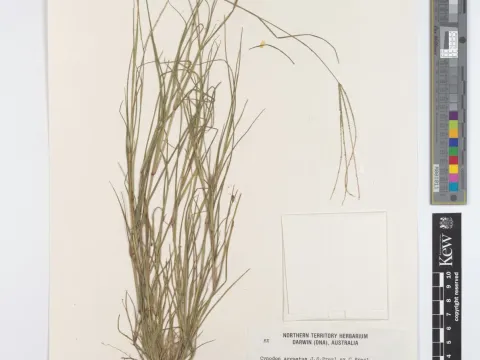
Cynodon arcuatus
Cynodon arcuatus
Cynodon arcuatus is a perennial herbaceous plant belonging to the Poaceae family. In its natural habitat, it propagates primarily through creeping rhizomes and stolons, allowing the crop to colonize vacant areas quickly and efficiently.
What the section contains
Cynodon arcuatus
For intentional stand establishment, seeds should be sown in well-warmed soil during late spring or early summer. The optimal soil temperature for germination is at least 20–25 degrees Celsius to ensure uniform emergence.
Seeding depth should be minimal, as the seeds are fine and sensitive to soil compaction. In commercial practice, planting rooted stem cuttings or sod fragments is often preferred to provide a faster establishment rate compared to direct seeding.
Adequate soil preparation is crucial; the seedbed should be free of perennial weeds and leveled properly. Applying starter nitrogen fertilizers helps boost vegetative growth during the first year of establishment.
Light availability is a critical factor for the expansion of this species, as it is intolerant of heavy shade. Ensuring the seedlings are exposed to direct sunlight during the initial growth phase is essential for long-term stand health.
This crop is highly demanding regarding temperature and light conditions. Cynodon arcuatus prefers tropical and subtropical climates and is intolerant of frost or prolonged low temperatures during the winter season.
While adaptable to various soil types, it achieves maximum productivity on well-drained loams and light alluvial soils. It can withstand temporary waterlogging, but stagnant water may negatively affect the vitality of the root system.
Cynodon arcuatus possesses moderate drought tolerance, making it a viable candidate for cultivation in regions with distinct dry seasons. However, supplemental irrigation is necessary to maintain high green mass yields.
Optimal growth occurs in soils with a pH ranging from slightly acidic to neutral. The plant is highly sensitive to soil salinity, a factor that must be considered when selecting sites for commercial production.
During active growth, the plant requires significant nitrogen inputs to build biomass efficiently. Therefore, regular fertilization programs using organic or mineral sources are a key component of its agronomic management.
The primary use of Cynodon arcuatus is the establishment of high-productivity pastures for livestock. The crop demonstrates an excellent ability to regenerate following intensive grazing cycles.
The nutritional value of the green mass remains consistently high under regular mowing or grazing regimes, which prevents stem lignification and preserves quality. It is readily consumed by all types of grazing ruminants.
Yield potential can be substantial when proper management practices, such as balanced fertilization and appropriate grazing intervals, are implemented. Avoiding overgrowth is important to maintain a favorable leaf-to-stem ratio.
Beyond forage, this crop is valuable for soil conservation. Due to its extensive stoloniferous system, it effectively prevents soil erosion on sloping terrains and helps stabilize the topsoil horizon.
In its native regions, it is prized as one of the most resilient forage crops, capable of maintaining productivity over many years without the need for periodic reseeding.
Cynodon arcuatus is generally robust against many pathogens, though excessive humidity can occasionally lead to fungal leaf diseases. Rust and various leaf spots are the most common issues observed in humid conditions.
Insect pests that target foliage and roots pose the greatest risk. Wireworm larvae can cause significant damage during the establishment phase by feeding on the subterranean parts of the plants.
Various moth larvae and leaf-eating beetles may reduce biomass by feeding on succulent leaves. Regular monitoring of the field’s phytosanitary state allows for early intervention using biological or chemical control methods.
Weed competition is particularly critical during the early stages of establishment. Rapidly growing weeds can suppress young plants, making timely weeding or herbicide application essential for a uniform stand.
Implementing crop rotation and a managed grazing schedule helps minimize pathogen accumulation in the soil. Overgrazing can deplete the rhizome reserves and reduce the plant's natural immune response.
Harvesting for green mass is typically performed through mowing or livestock grazing during peak growth periods. The optimal mowing height is 5–8 centimeters above the soil surface to encourage rapid regrowth.
When producing hay, ensuring fast drying of the mowed biomass is vital, as the dense leaf structure can trap moisture. Using hay tedders during sunny weather is recommended for consistent quality.
The frequency of harvesting cycles depends on rainfall and irrigation availability. With adequate moisture, multiple cuts can be achieved within a single growing season without compromising the longevity of the crop.
For seed production, harvesting should occur when the seeds reach full waxy maturity and the inflorescences change color. Collection is performed either manually or mechanically depending on the scale of the operation.
Post-harvest management should include nitrogen fertilization and irrigation to accelerate the recovery of the stand for the next vegetative cycle, ensuring sustained productivity throughout the year.