
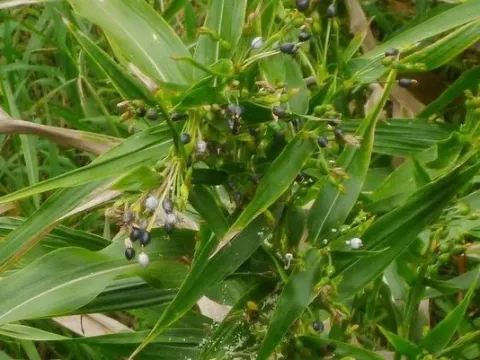
Coix aquatica
Coix aquatica
Coix aquatica is a moisture-loving herbaceous plant belonging to the Poaceae family. Naturally found along riverbanks and in swampy areas, the optimal sowing time is during periods of stable high temperatures when water and soil conditions are sufficiently warm to support rapid germination.
What the section contains
Coix aquatica
Sowing typically takes place in the spring, once the threat of night frost has passed, as this crop is highly sensitive to cold stress. Seeds are sown directly into the soil at a depth of 2–3 cm, ensuring adequate spacing between plants to allow for healthy tillering.
In professional farming, preparing the seedbed is a crucial step. Since Coix aquatica thrives in silty, nutrient-rich substrates, the soil or aquatic plot should be enriched with organic matter before sowing begins to ensure robust early growth.
The sowing technology may involve either direct broadcasting in flooded fields or a nursery seedling method for regions with shorter growing seasons. When using the seedling method, plants are transplanted to their permanent location once they have developed 3–4 true leaves.
While the plant acts as a perennial in tropical climates, it is often grown as an annual in temperate zones. Sowing density is adjusted based on the intended use, whether the goal is grain harvesting or green biomass production for fodder.
This crop has specific environmental requirements, with excessive moisture being the most important factor. Unlike most agricultural grasses, Coix aquatica is capable of thriving even when its root system is partially submerged, making it unique among cereal-like crops.
The plant prefers sunny, well-lit areas, as shade significantly reduces yield and slows the maturation of the grains. The temperature regime should ideally remain between 22 and 30 degrees Celsius throughout the entire vegetative cycle.
Soils for cultivation must have high water-holding capacity and sufficient organic content. An optimal pH range of 5.5 to 7.0 allows the plant to efficiently absorb micronutrients from the water-saturated environment.
The crop reacts negatively to the drying out of the substrate, so a reliable water source is critical for maintaining plant vitality. During hot periods, increased evaporation rates must be managed through continuous irrigation or water level maintenance.
For intensive growth, the application of nitrogen-phosphorus fertilizers is recommended. This promotes the development of significant vegetative mass and enhances the quality of the grains, which are highly valued for culinary and medicinal purposes.
The yield of Coix aquatica depends directly on water management and the length of the growing season. Under favorable conditions, a single plant can produce a significant number of inflorescences, each yielding dozens of seeds.
The grains of this plant are known for their high nutritional value and are widely used in Asian traditional medicine and gastronomy. With proper management, the commercial grain yield per unit area can be comparable to other water-dependent cereal crops.
The vegetative mass is also of economic importance, as it serves as a high-quality fodder for livestock. Its soft texture and nutrient profile make it easily digestible for various farm animals.
Maximum yield is achieved by maintaining optimal planting density, which ensures proper aeration of the root zone. Even though the plant loves water, stagnant conditions that lead to anaerobic rot must be avoided to keep plants healthy.
Yield statistics vary by region: in tropical belts, the plant demonstrates stable perennial performance, whereas in annual cultivation cycles, the yield is strictly dictated by the duration of the frost-free season.
Like other members of the Poaceae family, Coix aquatica is susceptible to various fungal diseases, especially in high-humidity and low-ventilation conditions. Powdery mildew and rust are primary pathogens that target the foliage.
Among pests, insects that damage stems and inflorescences, such as aphids and larvae of cereal flies, pose the greatest threat. These pests can significantly reduce seed viability and weaken the overall structure of the plant.
Root rot represents a serious danger if soil or water balance is disrupted, particularly if water becomes stagnant and oxygen-depleted. Prevention involves strict adherence to agro-technical standards and timely water cycling.
- Regular field monitoring to detect early signs of infection.
- Utilization of biological control agents to manage pest populations.
- Implementation of crop rotation to prevent pathogen buildup in the soil.
Effective phytosanitary control is essential to minimize losses and ensure the production of high-quality grain and biomass yields.
Harvesting Coix aquatica grain requires careful timing, as maturation often occurs unevenly. Harvesting is conducted when the grain husks acquire a characteristic shiny appearance, signaling physiological maturity.
When the plant is intended for fodder, the green mass should be harvested before the flowering phase begins, as this is when the nutrient concentration in the leaves and stems is at its peak.
Seeds are separated from the inflorescences either manually or using specialized machinery on larger scales. It is critical to ensure rapid drying of the harvested material to prevent mold growth during storage.
Grain moisture content during storage should not exceed 12–14%, which guarantees the preservation of all beneficial properties for an extended period.
Post-harvest processing includes cleaning impurities and sorting the seeds by size, which is necessary for their subsequent application in the food or processing industries.