
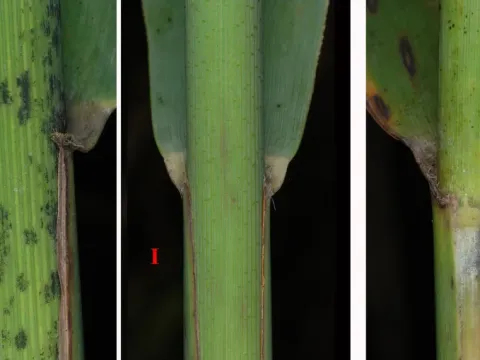
Common reed
Phragmites
Common reed (Phragmites australis), a member of the Poaceae family, is a perennial grass highly valued for its robust growth and ecological significance. In agricultural settings, it is primarily propagated through vegetative division of rhizomes rather than seeds.
What the section contains

Common reed
The optimal time for planting is early spring, once the soil has thawed, or in late autumn before the ground freezes. Rhizome segments, each containing at least two or three nodes, are placed into shallow trenches at a depth of 20 to 30 cm.
Planting density is crucial for long-term productivity; usually, 2 to 4 rhizome units per square meter are recommended. This spacing ensures that the reed coverage becomes dense within the first two growing seasons.
While seed propagation is possible, it is typically reserved for scientific breeding or specialized nursery conditions due to low natural germination rates and the need for controlled humidity during the initial growth phases.
During the first year, it is vital to manage weeds to prevent competition. Reed crops require consistent moisture, and while they are naturally flood-tolerant, standing water should be controlled until the root system is well-established.
Common reed is a helophyte, meaning it is highly adapted to wet environments. It thrives in soils with high water content, such as marshlands, riverbanks, and seasonal wetlands, where the water table is at or near the surface.
This crop is remarkably soil-agnostic, performing well in peat, silt, and sandy substrates. It shows high tolerance to varying levels of pH and even exhibits resilience to moderate salinity, making it useful for land remediation.
The species possesses significant climatic plasticity, surviving in a wide range of temperate and tropical zones. It remains dormant during winter, with rhizomes capable of enduring deep frost in sub-zero climates.
Abundant sunlight is a critical requirement for biomass accumulation. Shaded areas significantly limit the photosynthetic rate, leading to thinner, weaker stalks and lower total production yields per hectare.
Reeds are excellent at nutrient uptake, especially nitrogen and phosphorus. This ability makes them not only a productive crop but also a biological tool for treating agricultural runoff and preventing water contamination.
The yield of common reed is highly dependent on the age of the stand and the site conditions. In well-managed plantations, annual dry biomass yields can range from 15 to 30 tonnes per hectare.
Productivity typically peaks between the third and fifth years of a plantation's lifespan. Continuous, high-density growth requires occasional management, such as thinning or controlled harvesting, to prevent the buildup of excessive dead litter.
The high cellulose content of the stalks, often exceeding 45%, makes the common reed a premier raw material for the paper, pulp, and building industries, offering a renewable alternative to traditional wood sources.
Energy production is another major use for reed biomass. Due to its high heating value, it is processed into pellets or briquettes for thermal energy, providing a carbon-neutral solution for heating or industrial steam production.
Yield estimation is conducted by sampling the biomass in late autumn. Dry matter content should be accurately calculated, as moisture levels fluctuate significantly based on the time of harvest and environmental conditions.
Common reed is inherently hardy and resistant to most agricultural pests due to the high silica content in its tissues. Nevertheless, aphid infestations and specific stalk-boring larvae can occasionally impact younger, more tender shoots.
Fungal diseases, such as leaf rust (Puccinia phragmitis), can affect the vitality of the stands. These infections manifest as discoloration and can cause premature leaf senescence, thereby reducing the photosynthetic potential of the crop.
Weed competition from other invasive hydrophytes, such as cattails or sedges, can be a primary concern during the establishment phase. Monitoring and manual or mechanical removal are often necessary until the reed becomes dominant.
Improper hydrological management is the greatest threat to a healthy stand. Over-drying or prolonged flooding at depths exceeding one meter can lead to a decline in vigor, opening the door for opportunistic plant species.
Good agricultural practice, including the removal of old biomass and controlled water level regulation, is usually sufficient to manage these threats without the need for intensive chemical pesticide applications.
Harvesting common reed requires specific technical considerations. Winter harvesting, once the ground has frozen, is considered the gold standard as it prevents heavy machinery from compacting the soil or damaging the dormant rhizomes.
Late-season harvesting also provides drier raw material, which is ideal for industrial processing, building applications, and fuel production, as it minimizes the cost of subsequent drying processes.
For large-scale cultivation, specialized reed harvesters or modified combine harvesters are utilized. The goal is to cut the stems as close to the root base as possible to maximize biomass collection.
In cases where reed is harvested for animal feed, the timing shifts to the early growing season. Harvesting at this stage ensures the highest protein content and digestibility, though it requires careful management of the wet fields.
After collection, the stalks should be bundled or baled and stored in well-ventilated, dry areas. Ensuring low moisture levels is essential to prevent internal heating, mold formation, and structural degradation of the material.