
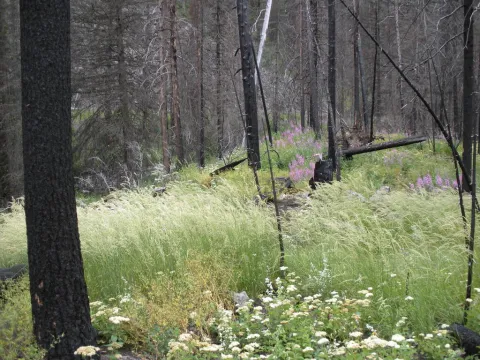
Reedgrass
Calamagrostis
Sowing of reedgrass (Calamagrostis) is primarily performed using seeds, although for specific cultivars, vegetative division of the rootstock is more common. The optimal time for sowing is early spring or late autumn before the soil freezes, when temperatures stabilize between 5–10 degrees Celsius.
What the section contains
 Bluejoint
Calamagrostis canadensis
Bluejoint
Calamagrostis canadensis
 Calamagrostis sesquiflora
Calamagrostis sesquiflora
Calamagrostis sesquiflora
 False reed grass
Calamagrostis pseudophragmites
False reed grass
Calamagrostis pseudophragmites
 Hairy small-reed
Calamagrostis villosa
Hairy small-reed
Calamagrostis villosa
 Hakone reed grass
Calamagrostis hakonensis
Hakone reed grass
Calamagrostis hakonensis
 Holm's small-reed
Calamagrostis holmii
Holm's small-reed
Calamagrostis holmii
 Lapland small-reed
Calamagrostis lapponica
Lapland small-reed
Calamagrostis lapponica
 Pine grass
Calamagrostis rubescens
Pine grass
Calamagrostis rubescens
 Plains reedgrass
Calamagrostis montanensis
Plains reedgrass
Calamagrostis montanensis
 Purple reedgrass
Calamagrostis purpurea
Purple reedgrass
Calamagrostis purpurea
 Purple small-reed
Calamagrostis canescens
Rough small-reed
Calamagrostis scabrescens
Purple small-reed
Calamagrostis canescens
Rough small-reed
Calamagrostis scabrescens
 Scottish Small-reed
Calamagrostis scotica
Scottish Small-reed
Calamagrostis scotica
 Slimstem reedgrass
Calamagrostis stricta
Steel reedgrass
Calamagrostis chalybaea
Slimstem reedgrass
Calamagrostis stricta
Steel reedgrass
Calamagrostis chalybaea
 Variegated Small-reed
Calamagrostis varia
Variegated Small-reed
Calamagrostis varia
 Wood small-reed
Calamagrostis epigejos
Wood small-reed
Calamagrostis epigejos
Reedgrass
Due to the small size of the seeds, they should be sown at a shallow depth, typically no more than 1–2 cm. Providing adequate space is crucial for root development; therefore, a spacing of 40–50 cm between rows is recommended to ensure the plants have enough room to grow.
In the first year of growth, the plant develops slowly, focusing mainly on establishing a basal rosette of leaves. It is vital to keep the area free of weeds during this initial phase, as the young grass competes poorly with aggressive weeds during its establishment period.
Vegetative propagation by dividing rhizomes is best done in early spring before the active growth phase or in autumn. Each division should possess 3–4 vigorous shoots and a well-developed root system to ensure high survival rates once transplanted.
Immediately after planting, irrigation is required to settle the soil around the roots and prevent them from drying out. When proper agricultural practices are followed, seedlings typically emerge within 14–20 days after the initial sowing.
Reedgrass belongs to the Poaceae family and is recognized as a hardy perennial plant native to temperate regions of the Northern Hemisphere. It exhibits excellent winter hardiness and can tolerate periods of moderate drought once fully established.
The plant thrives in moderately moist soils with good aeration, but it is highly adaptable, growing well in various soil types, from heavy clays to sandy landscapes. Its ability to tolerate different soil pH levels makes it a versatile choice for many agricultural environments.
Calamagrostis is highly photophilous and requires full sun exposure to develop robust stems and decorative inflorescences. In shaded conditions, the plant's ornamental value diminishes significantly, and the stems tend to become weak and prone to lodging.
The species is highly valued for phytoremediation and soil stabilization. Its dense network of rhizomes helps secure slopes and prevent soil erosion, making it a critical asset for land restoration projects and effective environmental management.
In commercial cultivation, the plant responds well to moderate nitrogen fertilization, which stimulates vegetative biomass production in the first half of the season. However, waterlogged soils should be avoided, as stagnant moisture can hinder root health and plant vigor.
The agricultural use of reedgrass is diverse, spanning from fodder production to landscape architecture. As a forage crop, it is prized for its early spring regrowth, which provides essential grazing material when other grasses are still dormant.
Yield of green mass depends heavily on soil fertility and moisture management. Under favorable conditions, the grass forms dense stands reaching up to 150 cm in height, providing a substantial hay harvest when cut at the optimal nutritional peak.
In breeding and land management, reedgrass is often included in seed mixes for urban greening. Its ability to maintain structural integrity and visual appeal well into late autumn makes it a preferred component in permanent landscape designs.
When grown for seed production, the crop should be harvested during full maturity, as the panicles develop their characteristic golden-straw color. Timely harvesting is essential to prevent seed shattering, as the seeds maintain high germination energy.
In farming systems, the plant acts as an effective windbreak, protecting sensitive crops from wind damage and improving the microclimate of the field. This also aids in snow retention, which helps preserve soil moisture throughout the winter season.
Reedgrass is generally resistant to many common diseases, although dense stands can occasionally be affected by cereal rust. This disease manifests as brownish pustules on the leaves, which can lower the quality of the harvested biomass if left unmanaged.
Among pests, aphids and various plant bugs are the most significant threats, as they feed on the sap of young leaves and shoots. Severe infestations can lead to leaf curling and a decrease in the plant's overall natural resistance.
Disease prevention is best achieved through proper spacing, which ensures adequate air circulation, and by avoiding excessive nitrogen applications. A well-ventilated stand significantly reduces the likelihood of fungal infections spreading through the crop.
Wireworms can occasionally damage the root systems, especially in sandy or light soils. Practicing crop rotation and performing deep autumn plowing are effective strategies to disrupt the life cycles of these soil-dwelling pests.
In cases of severe pest outbreaks in seed fields, systemic insecticides may be used if approved for local regulations. However, the plant's rapid growth energy often allows it to recover naturally from insect damage without the need for intensive chemical treatment.
Harvesting for forage purposes should take place during the heading phase, before the stems become overly lignified. This is the stage when the plant reaches its peak nutritional value, specifically protein content, which is vital for animal feed quality.
Hay is typically prepared using standard mowing equipment, followed by a drying period in swaths. Rapid drying is key to preserving the plant's green color and aroma, which are indicators of high-quality, palatable feed for livestock.
When harvesting for seed, a two-stage approach is recommended. The stems are mown into windrows, and after maturation, a combine harvester is used to thresh the crop with low drum speed settings to minimize seed damage and mechanical loss.
Cleaning the seeds requires using specialized screens to remove light chaff, as the seeds themselves are quite small and light. Seed storage should occur in dry, well-ventilated conditions with moisture levels maintained below 14 percent to ensure long-term viability.
Stubble left after harvesting serves an important role in preventing soil erosion during the off-season. By holding the soil in place and trapping winter precipitation, it creates a better foundation for healthy growth in the following season.