
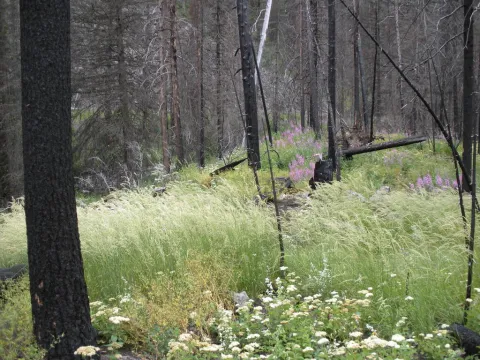
Reed grass
Calamagrostis Adans.
Reed grass (Calamagrostis) is a genus of perennial rhizomatous grasses in the Poaceae family, widely recognized for its robust growth and ecological adaptability. In agricultural settings, sowing is typically performed in early spring to utilize seasonal soil moisture for effective germination.
What the section contains


Reed grass
Seeds should be sown at a shallow depth of approximately 1 to 2 centimeters to ensure they receive enough light for initiation while remaining protected from desiccation. Proper soil preparation and post-sowing rolling are essential to maintain consistent soil-to-seed contact.
For large-scale meadow establishment or erosion control, sowing in late summer is also a viable practice. This allows the plants to establish a firm root system before the onset of the first hard frosts, ensuring overwintering success.
Seeding rates generally vary between 6 and 12 kilograms per hectare depending on the intended use—whether it is for intensive forage production or soil stabilization. When mixed with other grass species, the rate is adjusted to ensure balanced competition.
The use of high-quality, certified seed is recommended to prevent the introduction of weeds, as reed grass establishment can be initially slow until the rhizome network becomes fully developed.
One of the primary advantages of reed grass is its extreme ecological plasticity. It thrives in various soil types, ranging from nutrient-poor sandy soils to heavy, acidic clays and moisture-retentive peatlands where other crops often fail.
The plant is highly frost-tolerant and well-adapted to harsh continental climates. Its ability to remain dormant during unfavorable conditions and resume growth rapidly in spring makes it a reliable component of temperate forage systems.
Although it prefers moist conditions, the deep-reaching root system of Calamagrostis provides excellent drought tolerance once established. This feature makes it particularly useful for restoring degraded lands and dry slopes.
While reed grass performs best in full sunlight, it maintains decent productivity under partial shade, making it a versatile choice for heterogeneous landscapes and orchard understories.
Fertilization management, particularly nitrogen application in early spring, is critical to boosting biomass production. Balanced NPK levels help maintain the vigour of the grass stand throughout the grazing or cutting season.
Reed grass is capable of producing significant yields, often ranging from 4 to 7 tonnes of dry matter per hectare under favorable conditions. Consistent biomass production is achieved through proper field management and occasional nutrient replenishment.
The stand reaches its peak productivity from the second year onwards, once the rhizomatous root system has fully occupied the topsoil. This dense turf structure provides a stable foundation for multiple years of harvest.
In well-managed systems, reed grass provides a high-quality forage base for ruminants, especially when cut before the lignification of stems. Strategic nitrogen applications can further increase the crude protein content of the harvested forage.
While it is primarily utilized as hay or pasture, reed grass is also valued in soil conservation programs, where biomass yield is secondary to the extensive soil anchoring provided by the root mass.
Monitoring the growth cycle is essential, as yield potential is highest during the vegetative stage. Post-flowering, the nutritional value declines rapidly, necessitating timely management interventions.
Common diseases affecting reed grass include various rusts and leaf spot pathogens, which typically proliferate in humid, stagnant air conditions. Improving field drainage and air circulation are primary preventative strategies.
Insects like the Hessian fly or other stem-boring species can damage emerging shoots, potentially leading to stand thinning. Integrated pest management (IPM) practices, including the use of trap crops or timely harvesting, are recommended.
Weed competition can be a significant issue during the establishment year. Mechanical weed control or the application of selective herbicides may be necessary to ensure that the reed grass becomes the dominant species.
Root-feeding pests, such as wireworms, can occasionally compromise the vitality of older stands. Regular scouting is advised to assess population densities and prevent extensive damage to the root network.
Environmental stress, such as prolonged waterlogging, can encourage root rot pathogens. Selecting appropriate sites or improving drainage systems remains the most effective long-term disease management strategy.
Harvesting for hay should be timed for the late vegetative phase or the very early booting stage. At this point, the ratio of leaves to stems is optimal, ensuring high digestibility and nutrient density for livestock.
Modern haying techniques involve mowing followed by rapid tedding to ensure the moisture content drops quickly. This reduces losses caused by respiration and preserves the green color of the forage.
For ensiling, reed grass is best chopped and ensiled at the early heading stage. Proper compaction and the use of inoculants can help stabilize the fermentation process, resulting in high-quality, long-term stored feed.
When used for grazing, rotational management is vital. Moving livestock between paddocks prevents overgrazing and allows the grass to recover, thereby maintaining the density of the sward and its productivity.
Seed harvesting requires precision; it should be carried out when the panicles show a golden color but before the seeds fully shatter. Immediate drying after threshing is necessary to prevent spoilage and maintain high germination rates.