
Hairy small-reed
Calamagrostis villosa
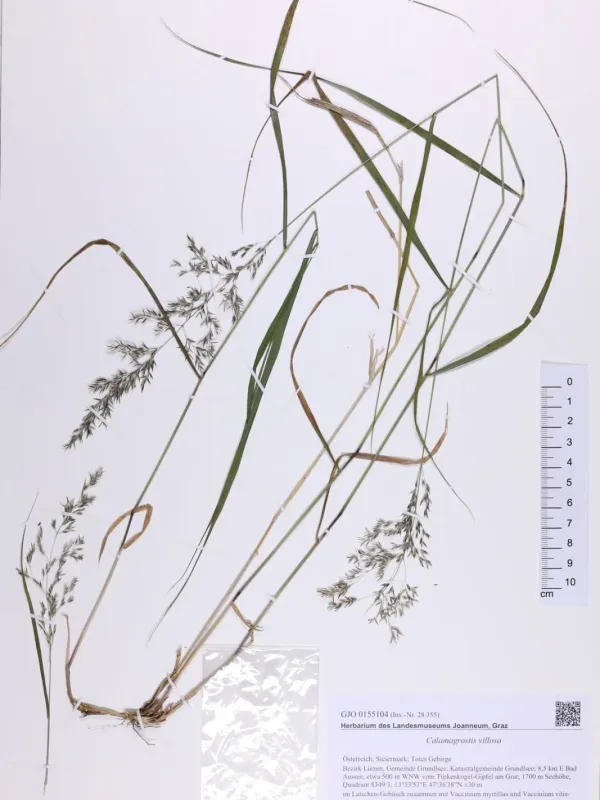
Description
Growing requirements
Hairy small-reed (Calamagrostis villosa) is a perennial grass species belonging to the Poaceae family. Native to the mountainous regions of Central and Southern Europe, it is well-adapted to cool, humid environments and acid soil substrates.
The plant is characterized by a vigorous rhizomatous system that allows it to thrive in nutrient-poor soils, including peatlands and stony terrain. Its ability to tolerate extreme temperature fluctuations makes it a valuable plant for high-altitude revegetation projects.
In terms of growing conditions, C. villosa prefers sites with consistent moisture levels and good drainage. While it thrives in full sunlight, it demonstrates remarkable shade tolerance, allowing it to grow in forest clearings and along woodland edges.
Agricultural management of this crop focuses on its utility as a soil stabilizer. Its dense root network is highly effective at preventing soil erosion on steep slopes and embankments where other agricultural grasses struggle to establish.
Although it is not typically harvested for intensive fodder production, it serves as a robust component in diverse pasture mixes, especially in regions with marginal land conditions that require low-maintenance vegetative cover.
Main diseases and pests
Hairy small-reed is primarily susceptible to common grass pathogens such as rust fungi and powdery mildew, which can develop rapidly under conditions of stagnant air and high humidity.
Insects such as grass aphids and certain types of stem-boring larvae may occasionally infest stands, potentially impacting seed production if left unmanaged during the growing season.
Preventative measures against disease include avoiding over-fertilization, which encourages overly dense growth that traps moisture and facilitates the spread of fungal spores among the leaves.
Maintenance of healthy stands involves regular monitoring for signs of infestation and ensuring that the field environment is not overly congested, thus promoting good air circulation.
In case of severe outbreaks, selective mowing is recommended to reduce the pathogen load and encourage the development of new, healthy regrowth from the base of the plants.