
Bluejoint
Calamagrostis canadensis
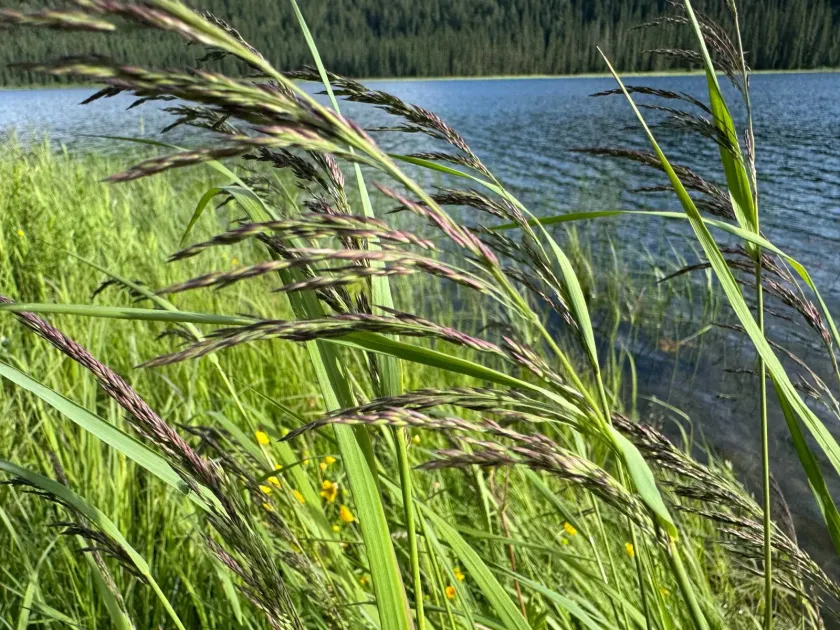
Description
Growing requirements
Bluejoint (Calamagrostis canadensis) is a perennial grass species belonging to the Poaceae family, widely distributed across North America. It is characterized by its adaptability to diverse environments, thriving primarily in moist meadows, marshes, and along the edges of water bodies.
The plant features a strong, rhizomatous root system, which enables it to stabilize soil effectively. Its stems typically reach heights of 1 to 1.5 meters, topped with a soft, open panicle. This botanical structure makes it a resilient competitor in various wetland ecosystems.
Climate requirements for this species include cool to temperate conditions. It is remarkably cold-hardy, capable of surviving harsh winters and growing vigorously during the long daylight hours of northern latitudes, which makes it a staple for mountain and boreal agricultural regions.
Regarding soil preferences, Bluejoint favors damp, nutrient-rich soils. It can tolerate acidic to neutral pH levels and is notably tolerant of anaerobic soil conditions resulting from seasonal flooding. Proper drainage management is secondary to ensuring sufficient nitrogen levels for optimal growth.
Agricultural propagation is often achieved through rhizome cuttings, although seed establishment is possible. When establishing a stand, it is crucial to ensure minimal competition from weeds during the first year, as the seedlings are relatively slow to develop their expansive root systems.
Harvesting
Bluejoint serves as an important forage crop, particularly in northern regions. Because it breaks dormancy early in the spring, it provides essential nutritional biomass before most other forage grasses reach their peak growth stage.
To maximize forage quality, harvest should occur before the plant enters the flowering stage. Early harvesting ensures that the protein content remains high and the stems do not become excessively fibrous, which significantly improves digestibility for livestock like cattle and horses.
Pasture management for this grass involves careful grazing rotation. Overgrazing can deplete the energy reserves stored in the rhizomes, potentially leading to stand thinning. Providing sufficient recovery time is key to maintaining a productive and dense grass cover.
Beyond agricultural use, this species is highly valued for environmental remediation. It is frequently planted to stabilize stream banks and disturbed landscapes, functioning as an effective tool against erosion in flood-prone areas or construction sites.
The overall yield of Bluejoint can be substantial under proper management practices, including nitrogen fertilization. With appropriate cutting regimes, the crop can support sustained production for several years, making it a reliable component in integrated land management strategies.