
Hakone reed grass
Calamagrostis hakonensis
Description
Growing requirements
Hakone reed grass (Calamagrostis hakonensis) is a perennial member of the Poaceae family. Native to East Asia, particularly the mountainous regions of Japan, this plant has evolved to thrive in woodland environments and damp, shaded slopes.
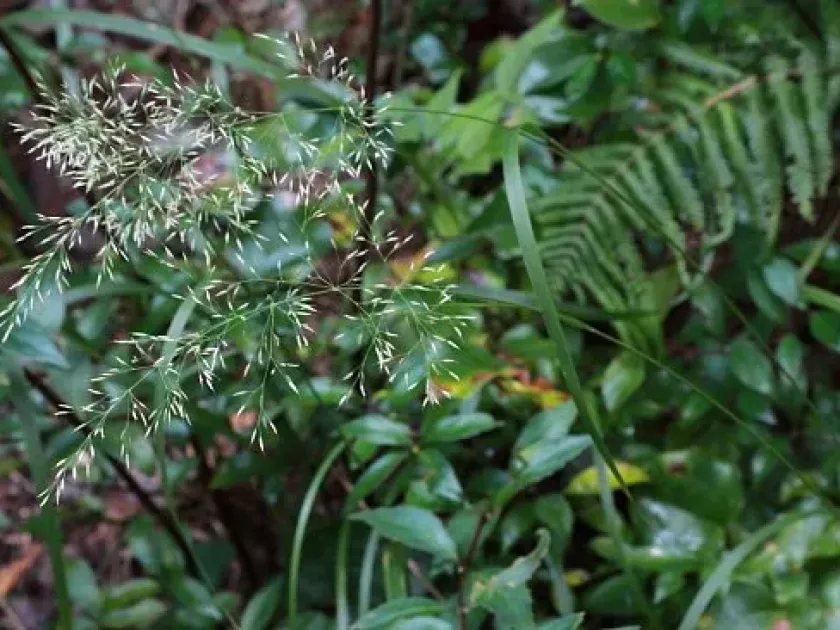
Botanically, it is characterized by its compact, tufted habit with thin, arching blades. It typically grows to a height of 30–60 cm, making it a versatile choice for gardeners looking for refined textures rather than overwhelming size in their landscape beds.
For optimal growth, this grass requires fertile, humus-rich soil that remains moist but never waterlogged. It performs best in partial shade, as excessive direct sunlight during mid-summer can lead to leaf scorch and dehydration.
It prefers a cool, humid climate and is less tolerant of extreme dry heat compared to other ornamental grasses. Gardeners in warmer zones must provide extra moisture and potentially mulch to keep the root system cool and stable during peak summer temperatures.
In landscaping, it is used for aesthetic purposes, serving as a ground cover, a border plant, or an accent piece in shade gardens. Its delicate appearance contrasts well with broad-leaved perennials, adding movement and grace to the design.
Main diseases and pests
While generally hardy, Hakone reed grass can be susceptible to common grass pathogens when growing conditions are suboptimal. The most frequent issues include rust fungi, which are often exacerbated by poor air circulation and excessive humidity in the foliage.
Pests such as aphids or spider mites may occasionaly infest the plant during spells of hot, dry weather. These pests weaken the plant by feeding on cell sap, which can cause discolouration of the blades and stunt growth if left unmanaged.
Prevention is the primary strategy for managing threats. Gardeners should ensure adequate spacing between individual plants to facilitate air movement, which prevents the build-up of the micro-climate required for fungal spores to thrive.
Sanitation practices, such as removing debris from around the base of the plant in late autumn, are essential. This reduces the habitat for overwintering pests and prevents the spread of spores from decayed organic matter.
Should chemical intervention be required, it is advisable to use selective fungicides or systemic insecticides at the earliest sign of damage. Always prioritize environmentally friendly solutions to protect the surrounding garden biodiversity.