
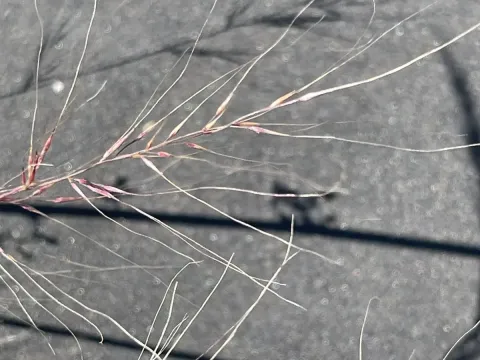
Redfieldia
Redfieldia
Redfieldia, commonly known as blowout grass, is a perennial grass species belonging to the Poaceae family. Native to the Great Plains of North America, it is an essential ecological engineer, specifically adapted to survive in shifting sandy soils and dunes.
What the section contains

Redfieldia
The plant is characterized by its long, creeping rhizomes, which allow it to spread across vast areas of loose sand. These rhizomes act as anchors, binding the substrate together and preventing soil erosion caused by wind—a critical function in arid and semi-arid environments.
Redfieldia thrives in full sun and requires minimal soil fertility. It is remarkably drought-tolerant, surviving conditions where most other agricultural species would fail due to water stress and nutrient deficiency. The species represents a sustainable option for reclaiming degraded landscapes.
Agronomic practices for Redfieldia focus on establishing a stable stand rather than high-input production. Planting is most successful in early spring. The seeds require light burial in the soil, and once established, the plant requires little maintenance other than protection from heavy traffic or overgrazing.
Economically, the primary use of Redfieldia is for environmental restoration and land conservation. While not a primary fodder crop for high-intensity livestock production, it provides a reliable source of browse for wildlife and cattle in challenging, low-fertility rangelands.
Redfieldia possesses strong natural resistance to common cereal diseases. However, in localized conditions with high humidity or poor air circulation, some rust fungi may affect the foliage, though these instances are rare and rarely impact the overall health of the stand.
Pest pressure is minimal, with few insect species specializing in Redfieldia. Occasional damage from grasshoppers or aphids may occur during population outbreaks, but the plant's rapid vegetative growth typically allows it to compensate for any minor tissue loss without chemical intervention.
The most significant threat to a Redfieldia stand is soil compaction and excessive mechanical damage to the rhizome network. Managing livestock stocking rates is crucial to allow the plant to maintain its protective ground cover and continue its role in soil stabilization.
Integrated management is the preferred approach, focusing on site selection and minimizing disturbance. There is generally no need for systemic fungicides or insecticides, as the species is well-adapted to self-regulating its health within its natural ecological niche.
For large-scale conservation projects, monitoring the establishment phase is essential. Ensuring that invasive, more aggressive plant species do not outcompete the Redfieldia during the first two seasons is the most critical step for a successful, long-term planting.