
Calamagrostis sesquiflora
Calamagrostis sesquiflora
Description
Growing requirements
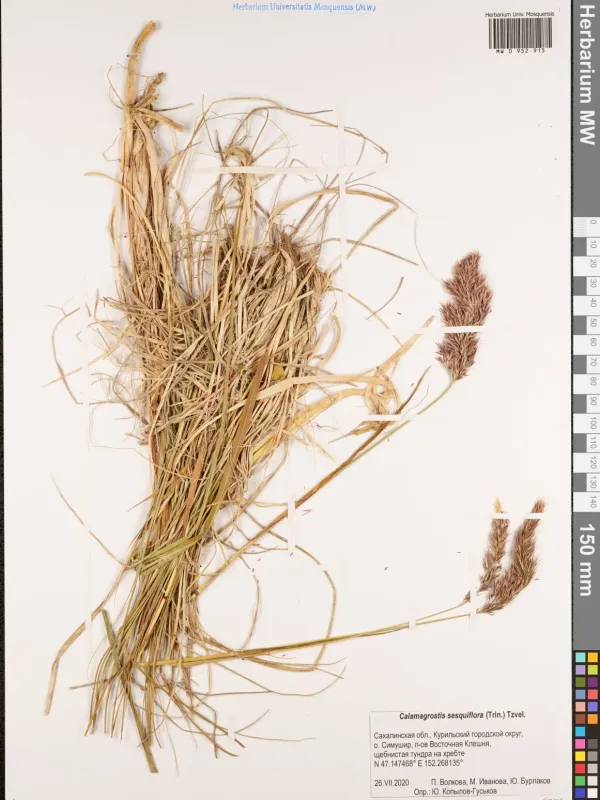
Calamagrostis sesquiflora is a perennial grass belonging to the Poaceae family. This species is native to the cold, moist regions of the Far East, including the Kuril Islands and northern Japan, where it has evolved to thrive in maritime climates characterized by high humidity and significant soil moisture.
Cultivation of this grass requires specific site conditions, primarily focusing on soil moisture retention. It performs best on soils that remain consistently moist throughout the growing season, showing high tolerance for acidic or neutral soils rich in organic matter. Its high frost resistance makes it an excellent candidate for regions with harsh winter conditions.
The botanical characteristics of this species include a sturdy, upright growth habit and narrow, linear leaves that form dense clumps. The inflorescence is a contracted panicle with distinctive spikelets, which are biologically significant for the identification of the species and its reproductive cycle.
Agronomic management involves optimizing the nutrient profile of the soil, with a focus on nitrogen and phosphorus availability to maximize biomass production. Proper spacing during establishment is crucial, as the grass tends to spread via its root system, forming a dense vegetative mat that prevents weed encroachment.
Economically, this species is utilized in forage production, particularly in northern pastoral systems. Furthermore, its robust root system makes it an essential tool for soil bioengineering, helping to stabilize slopes and prevent erosion in areas prone to runoff and environmental degradation.
Main diseases and pests
Like many species in the Poaceae family, Calamagrostis sesquiflora is susceptible to fungal pathogens such as rust and various leaf spot diseases when grown in high-density stands with poor air circulation or excessive leaf wetness.
Insect pests such as cereal flies and aphids can also impact plant health, particularly during the early vegetative stage. Monitoring for these pests is essential for maintaining crop vigor, especially in commercial forage settings where foliage quality is a primary concern for yield output.