
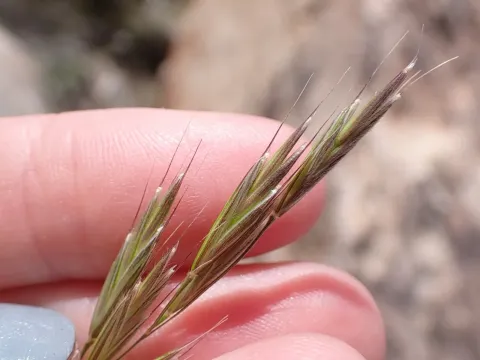
Chilean Brome
Bromus trinii
Chilean Brome (Bromus trinii) is an annual grass species belonging to the Poaceae family. It is recognized for its significant role as a forage crop, particularly in arid and semi-arid regions where other grasses may struggle to survive.
What the section contains
Chilean Brome
Native to the regions of South America, including Chile and Argentina, this grass has adapted to survive in environments with unpredictable rainfall. Its evolutionary history has made it a resilient species suitable for challenging climates.
Morphologically, the plant features erect culms and open panicle inflorescences. The root system is fibrous and deep-reaching, allowing the plant to extract moisture from soil depths that are inaccessible to many shallow-rooted crop species.
In terms of growth requirements, Chilean Brome thrives in well-drained, sandy, or loamy soils. It demonstrates remarkable tolerance to saline conditions and does not require intensive fertilization, making it a sustainable option for marginal lands.
The agricultural application of this plant is centered on its use as a livestock feed source. It can be harvested for high-quality hay or used in intensive rotational grazing systems, providing essential nutrients for ruminants during the growing season.
The primary pathological threats to the crop include various fungal infections, notably rust and powdery mildew. These diseases are more prevalent in areas with high humidity or during seasons with heavy, irregular rainfall.
Insects like aphids and cereal leaf beetles pose a significant risk to the foliage during the vegetative stage. Integrated pest management, including crop rotation and proper field hygiene, is essential for maintaining healthy stands of this grass.