
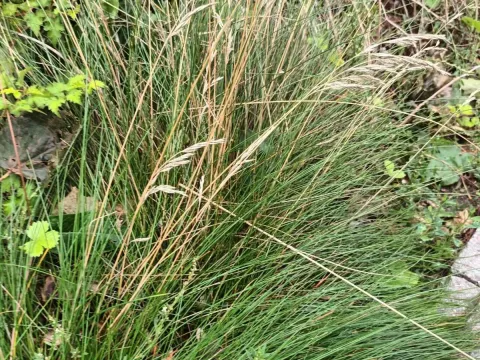
Chewing's fescue
Festuca nigrescens
Chewing's fescue should be sown in early spring when soil moisture is optimal for germination. Late autumn sowing is also a viable practice, allowing seeds to overwinter and sprout as soon as ground temperatures rise in early spring.
What the section contains
Chewing's fescue
The recommended seeding rate ranges from 15 to 25 kg per hectare, depending on the intended use, such as pasture establishment or turf production. Seeds should be sown shallowly, at a depth of 1–2 cm, as they are small and need light for proper emergence.
Incorporating the seed into the soil using a roller is essential to ensure good soil-to-seed contact. This practice promotes faster and more uniform establishment, especially in drier environments.
As a slow-growing grass in its establishment phase, it requires careful weed control during the first few weeks after emergence. Once the grass reaches the tillering stage, it becomes much more competitive against weed species.
Once established, this species creates a dense and durable sod, making it an excellent choice for preventing soil erosion and establishing long-term ground cover in various agricultural or landscape settings.
As a member of the Poaceae family, Chewing's fescue is highly valued for its adaptability to diverse environmental conditions. It performs best in well-drained, fertile loamy soils and avoids waterlogged sites.
The plant exhibits exceptional cold tolerance, making it ideal for northern climates with harsh winters. It is also surprisingly resilient to moderate drought conditions due to its deep root system.
Chewing's fescue thrives in full sunlight but demonstrates good shade tolerance compared to other forage grasses. It prefers a soil pH between 5.5 and 7.0 for optimal nutrient uptake.
Regular fertilization with nitrogen is necessary to maintain high forage productivity throughout the growing season. Phosphorus and potassium applications are recommended to strengthen the root system and plant resilience.
The crop is sensitive to high soil salinity and excessive compaction. Providing proper soil aeration and maintaining a balanced nutrient profile are key to ensuring longevity and high performance.
The forage yield of Chewing's fescue is largely dependent on management practices, including irrigation and fertilization. Under optimal conditions, the grass can provide several cuttings per growing season.
Typical dry matter yields range between 4 to 6 tonnes per hectare. The nutritional value remains high if the crop is harvested at the right phenological stage, specifically at the start of heading.
Seed production is an important commercial aspect, with yields typically ranging from 400 to 600 kg per hectare. Harvesting must be timed precisely to avoid excessive seed shattering in the field.
The grass shows high regrowth capacity after grazing, making it an excellent component for permanent pastures. Its resistance to trampling ensures that the sod remains productive for 5 to 7 years.
Supplemental irrigation during peak summer months can significantly increase biomass production, ensuring consistent forage quality even during naturally dry periods of the year.
Common diseases affecting this crop include rust and powdery mildew, which are more prevalent in high humidity or overcrowded stands. Maintaining proper spacing and air circulation is the best preventive measure.
Root rot can occur in fields with poor drainage. Implementing a sound crop rotation plan and choosing sites with adequate soil structure are vital for preventing these soil-borne fungal pathogens.
Insect pests such as cereal flies and wireworms can damage young shoots and root systems, respectively. Early detection and targeted insecticide applications are often necessary to protect the stand.
Good field hygiene, including the removal of volunteer grasses and weeds, reduces the habitat for pest populations. Regular monitoring during the spring growth phase is essential for effective pest management.
While Chewing's fescue has a robust natural defense system, weakened plants are more susceptible to infection. Maintaining optimal soil fertility and avoiding overgrazing help keep the plants healthy and resistant.
Harvesting for hay should occur at the early heading stage to maximize protein content and digestibility. Delaying harvest leads to increased lignification, which lowers the overall feed quality.
When harvesting for seed, a two-stage method (swathing followed by combine harvesting) is often preferred to allow for even ripening and to minimize mechanical seed loss during the operation.
Post-harvest, seeds must be dried to a moisture content of no more than 13-14% to ensure storage stability and viability. Adequate ventilation in storage facilities is required to prevent heat buildup.
The final cut of the season should be made well before the first frost. This allows the plant to store essential carbohydrates in its crown and roots, which is critical for winter survival.
Following harvest, performing light harrowing can help remove debris and promote tillering. This maintenance step revitalizes the stand and encourages denser growth for the following season.