
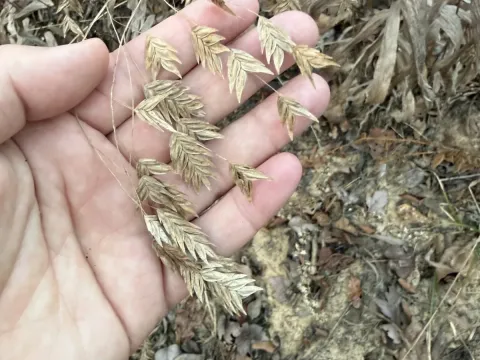
Chasmanthium
Chasmanthium
Chasmanthium, commonly known as Northern Sea Oats, is typically propagated by seeds or division. Seeds should be sown in early spring, once the soil has warmed up sufficiently, ensuring a consistent environment for germination.
What the section contains

Chasmanthium
For optimal results, seeds require a period of cold stratification, which significantly improves the germination rate. They should be planted at a shallow depth, lightly covered with soil to maintain the necessary moisture levels during the early stages.
Division is considered the most reliable method for established gardens. Dividing mature clumps in early spring or autumn encourages vigorous growth and helps maintain the health and vitality of the grass stands.
When transplanting, providing adequate spacing between plants is crucial. Placing plants approximately 40 to 60 centimeters apart allows for proper airflow and prevents the competition for resources, resulting in healthier specimens.
Post-planting care requires keeping the soil consistently moist until the plants are well-established. Newly sown areas should be protected from extreme drying, as the seeds and young seedlings are sensitive to drought in their initial development phase.
Chasmanthium belongs to the Poaceae family and is native to North America. It is a hardy, perennial grass characterized by its unique, drooping seed heads that resemble flattened, oat-like spikes, providing significant ornamental value.
The plant thrives in moist, fertile soils, though it demonstrates surprising adaptability to different environmental conditions. It is frequently found in woodland edges and riparian areas, indicating its preference for partial shade, especially in warmer climates.
Regarding climate, Chasmanthium is well-suited to temperate regions. It can tolerate full sun provided the soil remains consistently moist, but partial shade is often preferred to maintain the deep green color of the foliage throughout the summer.
The agronomic practices for this culture are relatively straightforward, focusing on soil health and seasonal maintenance. Periodic application of balanced fertilizers during the early growing season can boost foliage density and floral display.
In landscape design, this grass is prized for its aesthetic appeal during late summer and autumn when its seed heads turn a beautiful bronze color. It serves as an excellent choice for naturalizing gardens, shade borders, and wildlife-friendly plantings.
While Chasmanthium is generally robust, it is not immune to issues if grown in improper conditions. Overwatering or planting in poorly drained soil is the most common precursor to fungal issues and root health problems.
Fungal leaf spot can occur during prolonged periods of high humidity and poor air circulation. Improving the spacing and ensuring the foliage dries out sufficiently are effective preventative measures against such outbreaks.
Pests such as aphids or spider mites can occasionally affect the grass, particularly during stressful dry spells. Regular inspection is recommended to identify these infestations early and apply appropriate biological or chemical controls if necessary.
Root rot represents a significant threat when the plant is kept in saturated, anaerobic conditions. If the plant shows signs of yellowing or decline, the drainage conditions should be assessed and corrected immediately to save the stand.
Sanitation practices, including the removal of old foliage in early spring, are vital for disease management. Clearing away plant debris prevents the buildup of pathogens and provides a clean start for the new season's growth.