
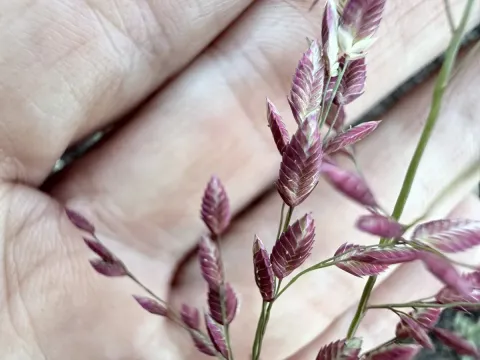
Chinese lovegrass
Eragrostis unioloides
Eragrostis unioloides, commonly known as Chinese lovegrass, belongs to the Poaceae family and is recognized as a hardy perennial grass species. It is widely adapted to tropical and subtropical climates where it serves as a reliable forage source for livestock production.
What the section contains
Chinese lovegrass
The plant exhibits a bunch-forming growth habit with distinct, flat, and often purplish or pale-colored spikelets. Its robust root system allows it to stabilize soil and survive in environments where other grasses might struggle due to moisture stress.
Environmental requirements for this grass include ample exposure to sunlight and warm temperatures. It thrives in regions with seasonal rainfall patterns but is noted for its resilience during extended dry periods, making it a valuable plant for drought-prone grazing lands.
Regarding soil preferences, Chinese lovegrass is not particularly demanding and can grow in a variety of textures, ranging from sandy soils to more compacted clay. However, adequate drainage is crucial to prevent root zone suffocation and ensure optimal biomass accumulation.
In terms of agricultural utility, it is primarily managed as a pasture crop. Its ability to regrow rapidly after grazing or mowing makes it an excellent candidate for intensive rotational grazing systems, providing consistent forage availability throughout the season.
Common pathological threats for this grass include leaf rusts, which can significantly reduce the photosynthetic capacity of the plants. These fungal pathogens typically flourish under humid conditions and can spread rapidly across a field if left unchecked.
Fungal leaf spots are another significant concern, leading to chlorosis and premature senescence of the foliage. Proper pasture management, including maintaining appropriate grazing pressure, helps reduce the density of the canopy and improves airflow, thus mitigating these risks.
Insect pests, such as aphids and various grass-feeding larvae, pose a threat by extracting nutrients and damaging the structural integrity of the stems. Outbreaks are often cyclic and correlate with weather patterns favorable to pest populations.
Root-knot nematodes can also be problematic in specific soil types, especially in fields with a history of monocropping. Infestation leads to stunted growth and nutrient uptake deficiencies, which can diminish the overall lifespan of the grass stand.
Effective pest and disease control requires a preventative approach, focusing on site selection and ensuring the plants are not under nutritional stress. Regular monitoring for early signs of infection is essential for timely intervention and sustained forage yield.