
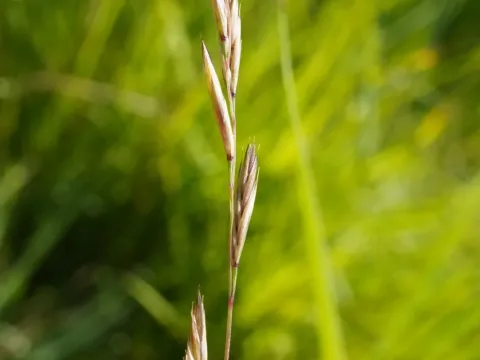
Chewing's fescue
Festuca trichophylla
Chewing's fescue is typically sown in early spring or early autumn when temperatures are moderate and soil moisture levels are optimal. These seasons allow the grass to establish a robust root system before facing extreme summer heat or winter dormancy.
What the section contains
Chewing's fescue
The recommended seeding rate is between 20 and 35 grams per square meter. When used in mixtures, the percentage is adjusted to ensure it dominates the turf, as this species is highly valued for its dense, fine-bladed growth habit.
Preparation of the seedbed is essential: the area must be cleared of debris, leveled, and loosened to a depth of at least 5 centimeters. Proper soil contact is facilitated by light rolling after seeding, which prevents seeds from being washed away or drying out prematurely.
Germination usually takes 14 to 21 days depending on soil temperature and consistent moisture. Keeping the top layer of soil moist during this period is the most critical factor for successful stand establishment.
Once established, the grass is low-maintenance, but initial care is vital. Avoiding early foot traffic on new seedlings ensures that the turf develops a uniform and durable structure that will last for years.
As a member of the Poaceae family, Chewing's fescue is recognized for its superior performance in both sun and partial shade. It is a bunch-type grass, meaning it forms dense clusters rather than spreading by rhizomes, which creates a very fine, uniform surface.
It thrives in well-drained, slightly acidic to neutral soils and has an excellent tolerance for nutrient-poor conditions. Its ability to survive on minimal fertility makes it an environmentally friendly choice for residential and commercial landscaping.
This grass is highly drought-tolerant, maintaining its color and vitality even during periods of low precipitation. Its low vertical growth rate reduces the frequency of required mowing, which is a major advantage for maintenance efficiency.
The climate requirements include a preference for cool-to-temperate regions, though it shows decent heat tolerance compared to other fescues. It handles cold winters with ease, making it a reliable perennial cover across many northern and temperate zones.
Maintenance should focus on periodic nitrogen fertilization during the active growing season and regular aeration if the soil becomes compacted. Proper mowing height, typically kept around 4–6 centimeters, helps preserve the plant's health and density.
Red thread (Laetisaria fuciformis) is the primary disease affecting Chewing's fescue, typically appearing as reddish-pink fungal growth on the leaves. It usually indicates a nitrogen deficiency and poor aeration in the turf canopy.
Powdery mildew can occur in areas with restricted airflow or excessive shade. Proper management involves thinning surrounding vegetation to increase light penetration and airflow, reducing the humidity around the grass blades.
Root rot, driven by stagnant water, is a significant threat to long-term stand survival. Ensuring proper drainage is the most effective preventative measure to keep the root zone healthy and oxygenated.
Pests like white grubs can cause severe damage by feeding on the root system, leading to patches of brown, dying grass. Monitoring for insect activity during the late summer months is recommended in areas prone to infestations.
While Chewing's fescue is generally resilient, it can be susceptible to dollar spot during periods of high humidity and warm nights. Fungicidal applications should only be considered if cultural practices, such as proper fertilization and irrigation, fail to control the issue.