
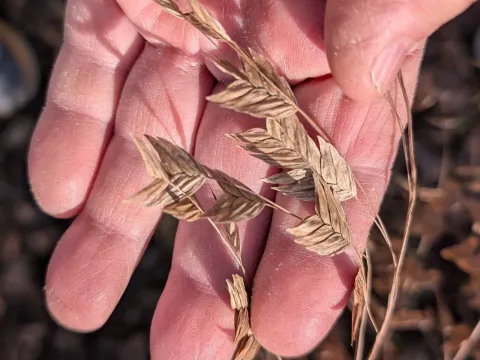
Chasmanthium
Chasmanthium Link
Sowing of Chasmanthium is primarily carried out in the spring when soil temperatures reach 15–18 degrees Celsius. Seeds require pre-sowing stratification to improve germination energy, which is critical for uniform crop emergence.
What the section contains

Chasmanthium
Cultivation via greenhouse seedlings is also acceptable, allowing established plants to be transplanted to their permanent site in early summer. The optimal sowing depth is between 0.5 and 1 centimeter to ensure strong sprout development.
For direct seeding into the field, ensuring regular moisture is essential, as the drying of the topsoil layer during the germination period can be detrimental to young seedlings.
As seedlings grow, thinning is necessary, maintaining a distance of at least 30–40 centimeters between plants to provide sufficient space for optimal nutritional uptake.
When using vegetative propagation through root division, planting should be done either in early spring or early autumn to facilitate proper rooting before extreme weather arrives.
Chasmanthium, a member of the Poaceae family, prefers semi-shaded environments, although it adapts well to full sun provided there is adequate irrigation.
The crop has moderate soil requirements, but it thrives best in fertile, well-drained loamy soils with a neutral or slightly acidic pH balance.
In its natural habitat, the plant grows in woodland areas, so high organic matter content in the soil significantly improves root system development and spikelet formation.
Climatic requirements for Chasmanthium include a need for moderately humid air; in arid regions, supplemental irrigation is mandatory to prevent leaf yellowing and stress.
A key factor for winter hardiness is the presence of stable snow cover, although mature plants are generally resilient to short-term temperature drops in temperate zones.
The primary threat to this crop includes fungal diseases that develop during prolonged moisture stagnation in the root zone or poor air circulation within dense plantings.
Under high humidity, powdery mildew may occur, manifesting as a whitish coating on leaf blades and requiring the application of specific fungicidal treatments.
Among pests, aphids and spider mites are notable, frequently attacking weakened plants during hot and dry spells throughout the summer growing season.
Root rot is a severe physiological disorder caused by excessive soil moisture, leading to wilting and the eventual death of the entire plant structure.
Regular sanitation of planting areas by removing debris and maintaining a consistent irrigation schedule serves as the best preventative measure against disease outbreaks.
Harvesting for ornamental purposes or seed production is typically performed in late summer or autumn when the characteristic drooping spikelets have fully matured.
For decorative use, spikelets are cut after they have acquired a bronze or golden hue, ensuring they maintain their structure for dried arrangements.
When collecting seeds, it is important to harvest before the spikelets shatter, which usually occurs as the plant reaches full biological maturity.
Harvested materials should be stored in a dry, well-ventilated area to prevent fungal development on the harvested inflorescences during the drying process.
In landscape maintenance, the foliage is typically cut back to the ground in early spring, just before the new growth cycle begins.