
Brachiaria notochthona
Brachiaria notochthona
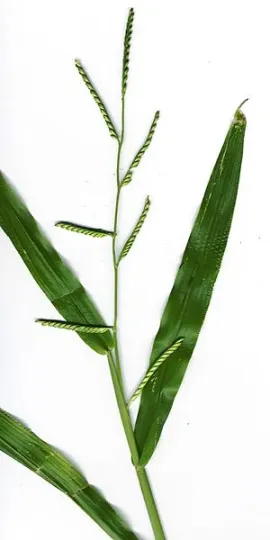
Description
Sowing dates
Sowing Brachiaria notochthona requires well-warmed soil, as the seeds are sensitive to low temperatures during the early germination stage.
The optimal time for planting is when soil temperatures are consistently above 18-20 degrees Celsius to ensure rapid establishment.
In tropical and subtropical regions, sowing is typically synchronized with the start of the rainy season to rely on natural moisture for emergence.
Seeds should be planted at a shallow depth of approximately 1-2 centimeters, facilitating quick root anchorage and sprout development.
Seeding rates should be determined based on the intended purpose of the stand, whether it is for intensive pasture grazing or hay production.
Growing requirements
Brachiaria notochthona belongs to the Poaceae family and is well-adapted to the high solar radiation typical of tropical climates.
The crop exhibits significant drought tolerance due to its efficient C4 photosynthetic pathway, allowing it to survive periods of water scarcity.
It prefers well-drained soils, though it shows notable resilience to temporary waterlogging during heavy rainfall, common in its natural habitat.
For optimal growth performance, the soil pH should be maintained in the slightly acidic to neutral range for better nutrient availability.
Application of nitrogen-based fertilizers is crucial to stimulate vigorous vegetative growth and maximize the biomass yield of the stand.
Yield
The yield of Brachiaria notochthona is directly influenced by proper management practices and the frequency of grazing or harvesting cycles.
Under favorable management conditions, the crop provides high-quality forage mass per hectare, making it a reliable feed source for livestock.
A key biological trait is the plant's rapid regrowth capacity after defoliation, which is essential for maintaining highly productive pastures.
Depending on local climatic conditions, producers may achieve multiple harvest cycles throughout a single agricultural growing season.
The nutritional profile of the harvested mass, particularly its protein content, makes it a superior option for sustainable cattle production.
Main diseases and pests
Primary threats to Brachiaria notochthona include fungal diseases that flourish in high-humidity conditions and poor air circulation within the field.
Soil-dwelling insect larvae can pose a risk by damaging the root systems, especially in younger plants during the initial stages of development.
Foliar leaf spots caused by specific pathogens are also observed, particularly during extended rainy periods that facilitate the spread of spores.
Regular field scouting is essential for the early detection of pests and pathogens to allow for timely and effective intervention strategies.
Using certified seed lots and maintaining appropriate plant density helps in mitigating risks and preventing the spread of diseases.
Harvesting
Harvesting for hay production must be strictly timed, as maturity beyond the optimal stage leads to a significant reduction in nutritional value.
Mowing should be performed prior to seed maturation to ensure the maximum concentration of proteins and sugars is retained in the biomass.
For pastures, managing the grazing height is critical to prevent overgrazing and to encourage quick recovery of the root system for regrowth.
The use of advanced forage harvesting machinery facilitates faster drying, which is essential for preserving the quality and integrity of the fodder.
Post-harvest management, such as supplemental fertilization, is highly recommended to stimulate the next growth cycle and maintain stand longevity.