
Brachiaria mollis
Brachiaria mollis
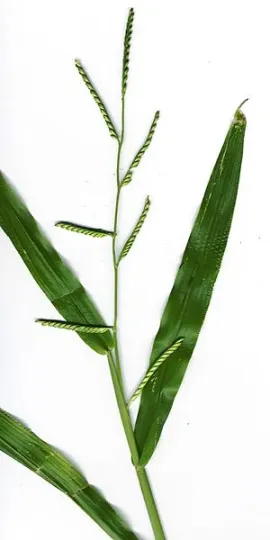
Description
Sowing dates
Brachiaria mollis is a robust perennial grass belonging to the Poaceae family, widely recognized for its importance in tropical and subtropical agriculture.
The sowing process typically commences at the beginning of the rainy season to ensure that the seeds receive sufficient moisture for germination and establishment.
Optimal soil temperatures for planting are between 20°C and 25°C, which facilitates rapid root development and strong initial growth of the grass seedlings.
Seeds should be sown at a shallow depth of 1 to 2 centimeters in rows, providing enough space for each plant to access nutrients and sunlight efficiently.
Post-sowing soil compaction is a recommended practice to improve seed-to-soil contact, which is essential for uniform germination across the field.
Growing requirements
This grass thrives in tropical environments and requires significant sunlight to reach its full productive potential, as shading inhibits its growth rate.
It adapts to various soil types, including sandy loams and clay soils, provided that they have adequate drainage to prevent waterlogging during heavy rainfall.
Brachiaria mollis exhibits moderate drought tolerance, allowing it to survive dry spells that would negatively affect less hardy species of pasture grasses.
To maintain high biomass production, the application of nitrogen fertilizers is crucial, especially following grazing or harvesting cycles to stimulate regrowth.
The soil pH should ideally be in the neutral to slightly acidic range to promote the availability of essential micronutrients required for healthy plant development.
Yield
The primary use of Brachiaria mollis is as a high-quality forage crop, serving both as a grazing pasture and as a source of hay for ruminant livestock.
It forms dense stands that withstand heavy grazing pressure, showing an impressive ability to recover quickly through vigorous vegetative regrowth.
The nutritional content of this grass is particularly beneficial during the early stages of growth, providing high protein levels essential for livestock health.
Yields are highly dependent on environmental factors and management intensity, with well-fertilized fields producing several harvests per growing season.
By balancing grazing and hay production, farmers can optimize the use of their land while ensuring a consistent supply of nutritious fodder for their animals.
Main diseases and pests
While generally hardy, Brachiaria mollis can be susceptible to specific sucking pests, such as leafhoppers, which can stunt growth and transmit plant diseases.
Fungal infections may occur in areas with prolonged high humidity and poor air circulation, necessitating careful monitoring of the crop's canopy health.
Weed management is vital during the establishment phase, as young seedlings can easily be outcompeted by invasive weeds if not properly maintained.
Overgrazing should be avoided as it weakens the plant's root system, making it more vulnerable to pathogenic attacks and reducing overall field longevity.
Integrated pest management strategies, including the use of resistant varieties, are recommended to maintain high production levels over the long term.
Harvesting
Harvesting for hay should be performed before the onset of flowering to maximize the concentration of proteins and sugars within the leaves and stems.
The hay dries relatively quickly in tropical climates, which helps to preserve the structural integrity and nutrient density of the harvested fodder.
Correct cutting height is an essential aspect of harvesting management, as it protects the growing points and ensures a rapid return to productivity.
Regular harvests promote tillering, which helps to keep the pasture thick and prevents the encroachment of undesirable weed species in the field.
Properly managed, harvested Brachiaria mollis serves as an excellent supplementary feed, ensuring livestock productivity during periods when green pasture is scarce.