
Tropical signalgrass
Brachiaria plantaginea
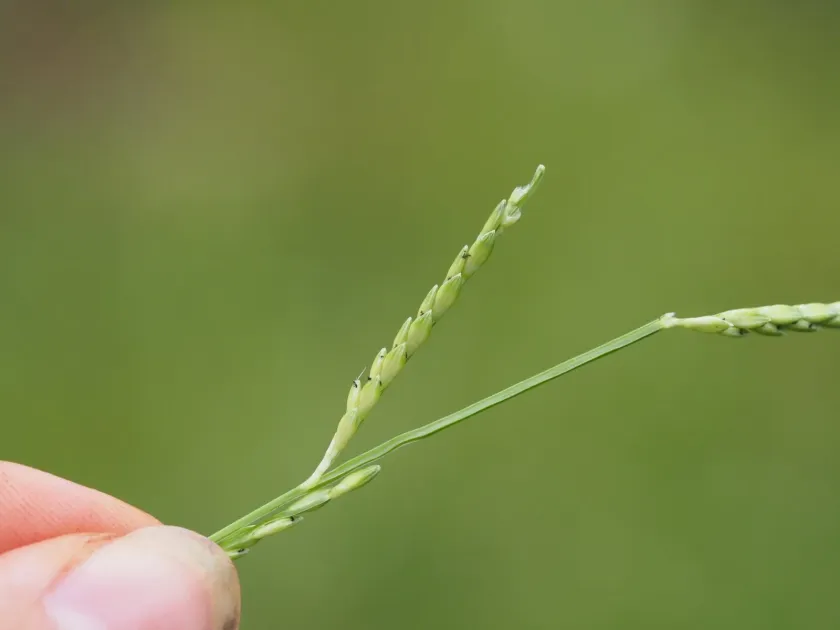
Description
Sowing dates
Sowing of tropical signalgrass (Brachiaria plantaginea) is carried out when stable warm weather arrives. The optimal period is late spring or early summer, once soil temperatures consistently exceed 18-20°C to ensure uniform germination.
Seedbed preparation is critical because the seeds are small. Seeds should be planted at a shallow depth of 1-2 centimeters to allow for optimal soil-seed contact and sufficient moisture absorption.
Seeding rates vary depending on the intended use, such as grazing or hay production. Broadcasting or drilling methods are common, followed by roller compaction to level the soil surface.
The crop exhibits rapid early growth, which allows it to establish a ground cover quickly, helping to suppress weed populations in the initial stages of development.
In tropical environments, multiple sowings per season are possible if moisture and soil fertility are managed effectively, allowing for high biomass productivity.
Growing requirements
Tropical signalgrass is a warm-season grass belonging to the Poaceae family. It thrives best in regions with high humidity and ambient temperatures ranging from 25°C to 35°C.
The crop prefers well-drained loamy soils with a pH level between 5.0 and 6.5. While it shows some tolerance to temporary waterlogging, it is sensitive to high soil salinity.
Possessing an extensive root system, it is efficient at extracting water from the soil profile. However, consistent rainfall or supplemental irrigation is required to maximize green mass production.
Effective nitrogen fertilization is essential for sustained biomass growth. Phosphorus and potassium levels should be monitored through soil testing to ensure longevity and nutritional density of the pasture.
This grass is sun-loving and performs poorly in shaded areas. Optimal exposure to sunlight is required to maintain high protein levels and vigorous vegetative growth.
Yield
With appropriate management, tropical signalgrass can yield between 20 and 40 tons of green mass per hectare per season. These figures are highly dependent on soil fertility and irrigation management.
The forage quality remains high throughout the growth cycle until flowering begins. Post-flowering, fiber content increases while protein levels decline, necessitating timely harvesting or grazing.
It is widely utilized in livestock production for both direct grazing and hay or haylage production. Its regrowth ability after grazing makes it a staple for intensive rotational systems.
Modern breeding programs aim to increase the protein-to-fiber ratio, making it an increasingly valuable feed source for cattle in tropical climates.
Regular fertilization following each cutting cycle is required to maintain high yield capacity across several years, provided the plants are protected from winter cold stress.
Main diseases and pests
Fungal diseases, specifically leaf spot, are a primary concern, particularly during periods of high humidity. Proactive fungicide application and resistant varieties are recommended for management.
Pests such as spittlebugs and aphids can cause significant damage by feeding on plant tissues and potentially transmitting viruses, which often leads to reduced plant vigor.
Nematode infestations can severely affect the root system, causing yellowing and stunted growth. Implementing crop rotation helps mitigate the build-up of these soil-borne pests.
Early-season weed competition is a major factor in yield reduction. Ensuring a clean field start is critical for establishing a dense and healthy stand.
- Frequent monitoring of pest populations.
- Nitrogen nutrient management.
- Selection of disease-resistant genetic material.
Harvesting
Harvesting for hay should occur at the onset of inflorescence to ensure the best balance between biomass quantity and nutritional density for livestock.
For pasture management, rotational grazing is highly recommended to prevent overgrazing and provide the plant with the necessary recovery time to rebuild its carbohydrate reserves.
Using mower-conditioners is advised to speed up the drying process of the thick stems, reducing the risk of mold in the final hay product during high-humidity periods.
Seed harvesting requires precision as the flowers mature unevenly. Collection should begin once the majority of seeds reach physiological maturity and begin to shatter.
Stored hay must be kept in dry, well-ventilated structures to prevent moisture accumulation, which can cause rotting and significant loss of nutritional value.