
Broadleaf signalgrass
Brachiaria platyphylla
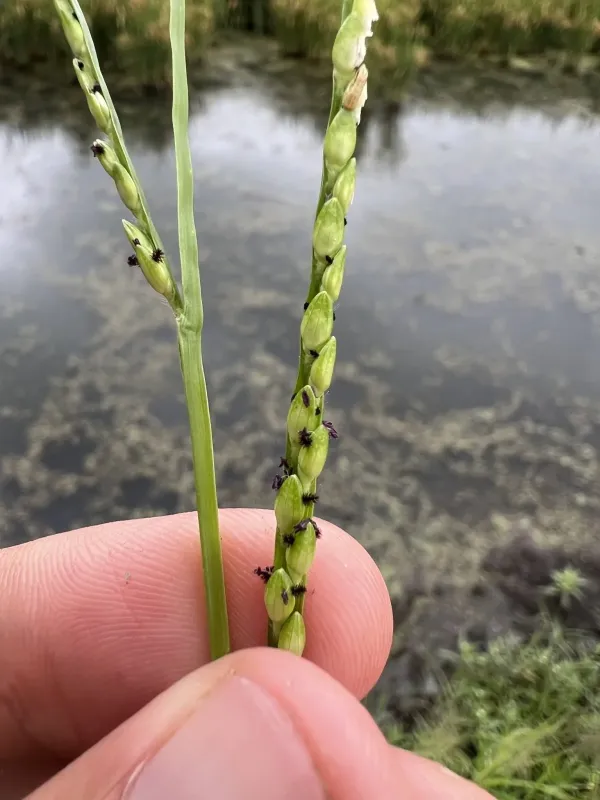
Description
Growing requirements
Broadleaf signalgrass (Brachiaria platyphylla) is a member of the Poaceae family. This species originates from the tropical and subtropical regions of the Americas and is widely valued as a productive forage plant.
The plant thrives in warm, humid climates, requiring consistent solar radiation and optimal soil moisture to maximize its vegetative biomass production throughout the growing season.
Soil requirements include well-drained, fertile substrates. While it shows some tolerance to different soil pH levels, it performs best in soils with high organic matter content and good physical structure.
Botanically, it is identified by its distinctively broad, lanceolate leaves and creeping stems that spread across the ground, forming dense mats that protect the soil from erosion.
In agricultural practice, it is primarily used for livestock grazing and as a source of high-quality hay, providing essential nutrients for ruminants and other grazing animals.
Main diseases and pests
Pathogenic fungi, particularly those causing leaf spot diseases, represent a major threat when high humidity and temperature coincide, leading to reduced photosynthetic area.
Insects like spittlebugs and various caterpillars can infest stands, significantly reducing yield and quality, necessitating periodic scouting and integrated management strategies.
Weed competition is a significant concern during the establishment phase, as the grass grows slowly until it fully establishes its prostrate, spreading growth habit.
Maintaining balanced soil fertility is crucial for plant health, as nutrient deficiencies can weaken the stand and make it more susceptible to secondary pest infections.
Proper harvest management is necessary to prevent stand depletion and ensure long-term sustainability, avoiding overgrazing which can invite opportunistic weed encroachment.