
Brachiaria argentea
Brachiaria argentea
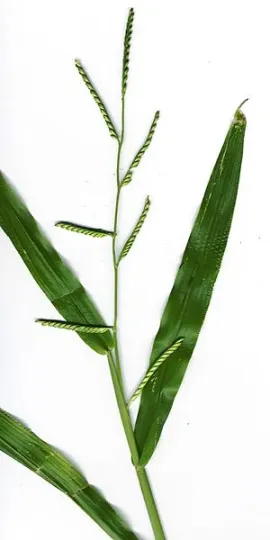
Description
Sowing dates
The optimal sowing time for Brachiaria argentea occurs when stable warm temperatures are established, with soil temperatures reaching 18–20 degrees Celsius. In tropical and subtropical regions, this usually coincides with the beginning of the rainy season, which provides the seeds with the necessary moisture for germination.
Seeds should be sown at a depth of no more than 1–2 centimeters, as they possess limited energy reserves and require good contact with the soil for rapid establishment. A row seeding method with spacing of 30–40 centimeters is recommended to reduce inter-plant competition during early growth stages.
The seeding rate depends on seed purity and germination percentage, typically ranging from 5 to 8 kilograms per hectare. An essential step is soil compaction immediately after sowing to prevent the surface layer from drying out and to accelerate uniform seedling emergence.
If overseeding into existing pastures, it is recommended to perform mechanical scarification or light soil cultivation to ensure seed-to-soil contact. Agronomists advise against sowing too early in cold soils, as this leads to delayed development and seedling loss.
Irrigation may be necessary if moisture is scarce during the first few weeks after sowing. Consistent water supply during these initial stages is critical for the development of a robust root system, which will provide the crop with high drought resistance in the long term.
Growing requirements
Brachiaria argentea, a member of the Poaceae family, is a heat-loving plant adapted to warm climates. It prefers well-drained soils and exhibits high tolerance to temporary water shortages, though it grows most vigorously under conditions of regular rainfall.
The crop shows moderate tolerance to soils with lower fertility levels, making it a valuable tool for utilizing marginal lands. However, for maximum green mass yield, the plant requires sufficient nitrogen and phosphorus, making fertilizer application justifiable on nutrient-depleted soils.
A critical requirement for growth is the absence of prolonged waterlogging on the soil surface. Waterlogged conditions lead to root system suppression and the development of root rots, which significantly reduce overall stand productivity and longevity.
The plant thrives in a wide range of soil acidity levels, including slightly acidic and neutral pH ranges. Nevertheless, loamy and sandy substrates are considered optimal, as they provide easy oxygen access to the roots and ensure effective excess moisture drainage.
Light availability plays a key role in biomass accumulation, so Brachiaria is not recommended for heavily shaded areas. It is ideally suited for open pasture lands where intense sunlight promotes rapid tillering and the formation of a dense vegetative cover.
Yield
The productivity of Brachiaria argentea depends on the frequency of harvesting and the intensity of pasture grazing. With proper management and optimal weather conditions, the crop can provide several harvests per growing season, ensuring a consistent supply of nutritious green mass.
The high leaf-to-stem ratio allows for the production of high-quality hay with good protein content. Green mass yield can vary significantly based on fertilization levels, with nitrogen fertilizers showing the best response by promoting rapid grass regrowth.
To preserve yield potential, it is recommended to avoid overgrazing. Maintaining an optimal stubble height of 10–15 centimeters facilitates faster plant recovery after grazing and prevents the premature depletion of nutrient reserves stored in the rhizomes.
It is important to note that nutritional value decreases during the flowering phase due to stem lignification. Therefore, for maximum nutrient yield, harvesting or grazing should be planned during the active vegetative growth phase, before massive reproductive organ formation.
Under favorable intensive cultivation conditions, average dry mass yield can reach 8–12 tonnes per hectare per year. This makes Brachiaria an economically viable crop for livestock operations specializing in extensive and semi-intensive beef and milk production.
Main diseases and pests
The crop is considered relatively resistant to most common grass diseases, though fungal infections may occur if management practices are poor. Symptoms of leaf rust are most frequently observed during periods of high humidity and moderate temperatures.
Pests, such as meadow moths and various cutworm species, can damage young seedlings and reduce total stand productivity. Monitoring phytophagous insect populations is a necessary requirement for implementing timely protective measures if economic injury thresholds are exceeded.
Nematodes can also be a limiting factor, affecting the root system in light sandy soils. Symptoms of infestation include general plant stunting, yellowing of leaf tips, and premature shoot death, which leads to sparse stands.
Disease prevention relies on proper crop rotation and avoiding monoculture on large areas. Maintaining high standards of agricultural discipline, including effective drainage of plots, minimizes the risk of epidemic outbreaks.
If chemical protection is required, registered fungicides and insecticides are used; however, applying these products on pastures requires strict adherence to waiting periods before grazing to ensure the safety of livestock products.
Harvesting
Harvesting Brachiaria argentea for hay or haylage is conducted during the period preceding full panicle emergence. This specific timing achieves the optimal balance between total plant biomass and the concentration of easily digestible carbohydrates required for quality feed.
The use of mower-conditioners speeds up the drying process, which is critical in unstable weather conditions. Rapid dehydration prevents nutrient degradation from sunlight and atmospheric precipitation, preserving high levels of carotene and vitamins.
The cutting height during harvest should be at least 8–10 centimeters. This technological practice is necessary for quick stand regeneration, as cutting too low damages growth points and slows down subsequent plant growth throughout the season.
When making hay, it is important to ensure uniform swath wilting with periodic turning. Monitoring the moisture content of the hay before baling or stacking helps avoid self-heating and mold development, which negatively affect animal health.
For grazing, a rotational or strip-grazing system is practiced. This allows for effective control of grass regrowth and prevents livestock from trampling the area, ensuring the most rational use of available biomass throughout the entire grazing rotation.